Unlock the True Cost of Your Investments: Demystifying the Total Expense Ratio
Deciphering the Total Expense Ratio: A Comprehensive Overview
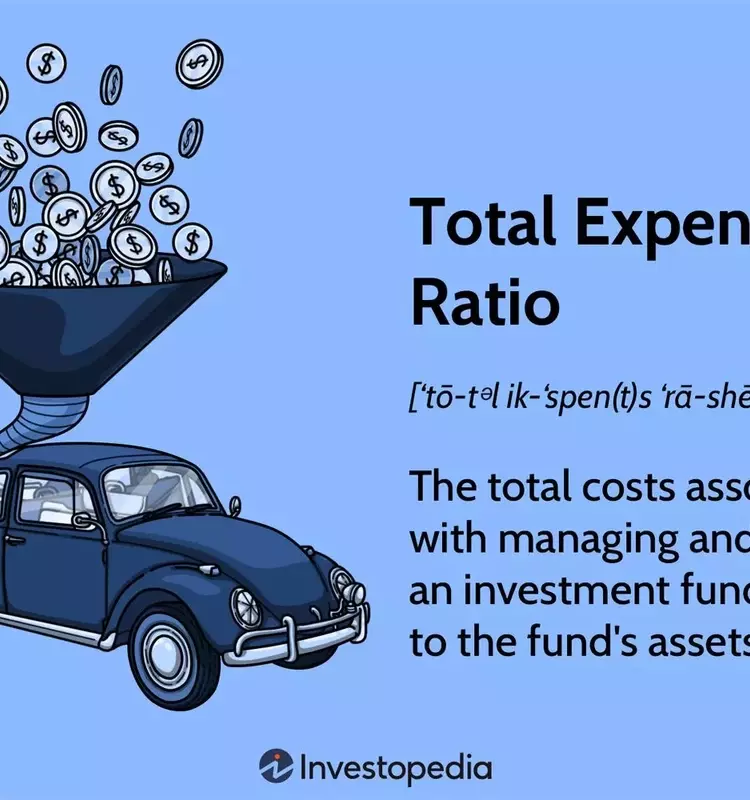
The Total Expense Ratio (TER) serves as a critical indicator, encapsulating all annual expenditures related to the administration and operation of an investment vehicle, such as a mutual fund. This ratio represents the fee levied upon investors, encompassing primary elements like management charges and sundry costs such as trading commissions, legal fees, auditor compensation, and various other operational outlays.
The Operational Dynamics of the Total Expense Ratio
The magnitude of the TER holds significant sway for investors, as these operational costs are systematically withdrawn from the fund, thereby diminishing the investors' actual returns. For instance, if an investment fund achieves a 7% return in a given year but carries a TER of 4%, the effective gain for the investor is considerably reduced to 3%.
The TER effectively consolidates all known operational expenditures of a fund into a singular metric, typically presented as a percentage. This percentage is derived from the total assets managed by the fund. Consequently, the absolute amount paid by investors as the TER is directly correlated with the overall size of the fund.
Funds generated through the TER are allocated to cover management, trading, and legal expenses, alongside auditing fees and general administrative costs. Any fluctuations in these operational expenses are typically reflected in adjustments to the TER.
Investment funds that employ a more active management strategy generally exhibit higher TERs. This is attributable to increased staffing costs and a greater volume of transaction-based fees, as fund managers incur brokerage charges for each buy and sell order executed. In contrast, automated or passively managed funds typically incur substantially lower operational costs, leading to a reduced TER.
Formulating the Total Expense Ratio: A Detailed Explanation
The calculation of the TER involves a straightforward formula that divides the total annual costs of the fund by its total assets. To determine this ratio, investors or analysts must first ascertain the fund's total assets, which can typically be found in regulatory disclosures, prospectuses, or directly on the fund's official website.
Subsequently, identifying the total costs, also detailed in the prospectus, can be more intricate. These costs encompass all expenses associated with the fund's operation, including management fees, trading expenses, and various overhead and administrative charges, such as 12b-1 fees for marketing the fund.
Unraveling Operating Expenses: What They Entail
Operating expenses, commonly referred to as operating costs, encompass all financial commitments tied to the management of the fund and its transactional activities. This category includes, but is not limited to, staff remuneration, brokerage fees, and professional accounting charges.
Additional prevalent expenses comprise costs related to shareholder communications, financial reporting, record-keeping systems, and the custodial services provided by the overseeing organization or asset manager.
A minor portion of the TER may also be channeled towards other general business operational costs. This can include seemingly simple expenditures like office rent and utilities. Often classified as overhead, these expenses represent any financial obligation not directly linked to the actual production of goods or services.
Total Expense Ratio Versus Gross Expense Ratio: Distinguishing the Differences
The Gross Expense Ratio (GER) quantifies the total percentage of a mutual fund's assets dedicated to its overall operation. In certain instances, a fund might implement agreements for waiving, reimbursing, or recovering a portion of its fees, a practice particularly common among newly launched funds. Investment companies and their managers may strategically waive specific fees post-launch to offer investors a more attractive, lower expense ratio.
Conversely, the TER reflects the fees applied to the fund after any such waivers, reimbursements, or recoupments have been enacted. These fee reductions are generally time-bound, after which the fund may revert to incurring the full spectrum of operational costs.
Inherent Limitations of the Total Expense Ratio
While the TER is designed to provide investors with a comprehensive understanding of the costs associated with owning an investment fund, it does not always capture every single charge. Certain expenses, particularly those incurred only once or those drawn directly from the investment capital, may be excluded from the TER calculation. These exceptions typically include commissions, stockbroker fees, securities transfer taxes, redemption fees, and sales load charges.
The Ultimate Assessment of Investment Fund Costs
The Total Expense Ratio (TER) serves as an invaluable tool for investors, offering clarity on the costs inherent in a specific investment fund. Its direct impact on diminishing investor returns underscores its importance. Consequently, the TER functions as a key metric for evaluating a fund's operational efficiency and plays a pivotal role in guiding investors toward judicious investment choices.
