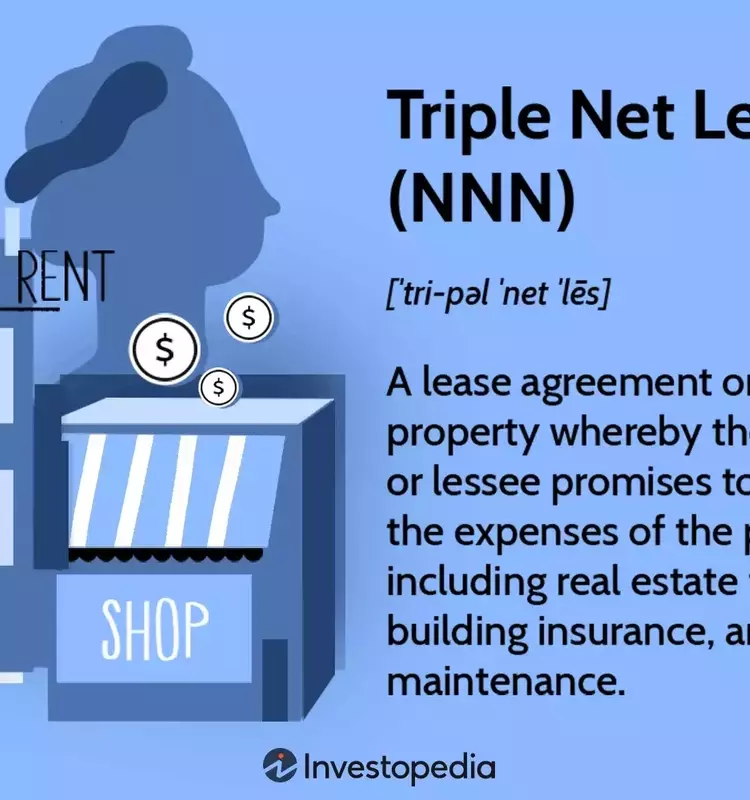
A triple net lease (NNN) is a specific type of commercial leasing agreement where the tenant undertakes the responsibility for not only the base rent but also for three significant property-related expenses: property taxes, building insurance, and maintenance costs. This structure is often seen as advantageous for landlords, as it provides a predictable and consistent income flow while transferring most of the operational burdens to the tenant. For tenants, this can translate to a lower monthly base rent, but it also means they absorb the financial risks associated with potential increases in these variable costs.
In commercial property transactions, a net lease signifies that the lessee will bear some, or all, ancillary charges beyond the base rent. Under a triple net lease, the occupant covers the building's property taxes, insurance premiums, and all upkeep and repair expenditures throughout the lease period. Typically, the rental fee for a triple net lease is more economical compared to traditional leasing options. The anticipated return on a commercial asset, known as the capitalization rate, frequently influences the lease amount, with the tenant's financial standing often playing a role in its determination.
Both parties involved in a triple net lease arrangement can find distinct benefits. Tenants gain autonomy over property upkeep, appearance, and associated costs like utilities. They also have the freedom to choose their insurance provider and contest property taxes if needed, allowing for more direct cost management. Landlords, on the other hand, secure a reliable and consistent revenue stream. The transfer of utility costs, repair expenses, taxes, and property management responsibilities to the tenant minimizes the landlord's day-to-day operational involvement.
Despite the advantages, triple net leases also present certain drawbacks. For tenants, the primary risk lies in assuming responsibility for potential increases in property taxes and insurance premiums. There's also the possibility that landlords might overstate operating expenses when setting the rental price, leading to tenants potentially overpaying for some costs. Furthermore, unexpected expenses could arise during the tenancy, adding to the tenant's financial burden. For landlords, securing suitable and financially stable tenants willing to commit to a triple net lease can be challenging. Periods of vacancy between tenants can result in a loss of rental income, and the tenant's financial health is crucial since they are responsible for covering operational expenses.
Triple net leased properties are a favored investment avenue for individuals seeking a steady income stream coupled with relatively low risk. These investments typically comprise a portfolio of at least three high-quality commercial properties, each fully leased to a single tenant and generating established cash flow. Such commercial assets can span various types, including office complexes, retail centers, industrial parks, or standalone structures occupied by financial institutions, pharmacies, or restaurant chains. Lease durations commonly range from 10 to 15 years, often incorporating provisions for rent adjustments over time. Investors in these properties benefit from consistent income and the potential for property value appreciation. They can acquire premium real estate without the concerns of vacancies, renovation costs, or leasing fees. Upon selling these properties, investors have the option to reinvest in other triple net lease assets without incurring capital gains taxes, by utilizing a 1031 exchange.
\