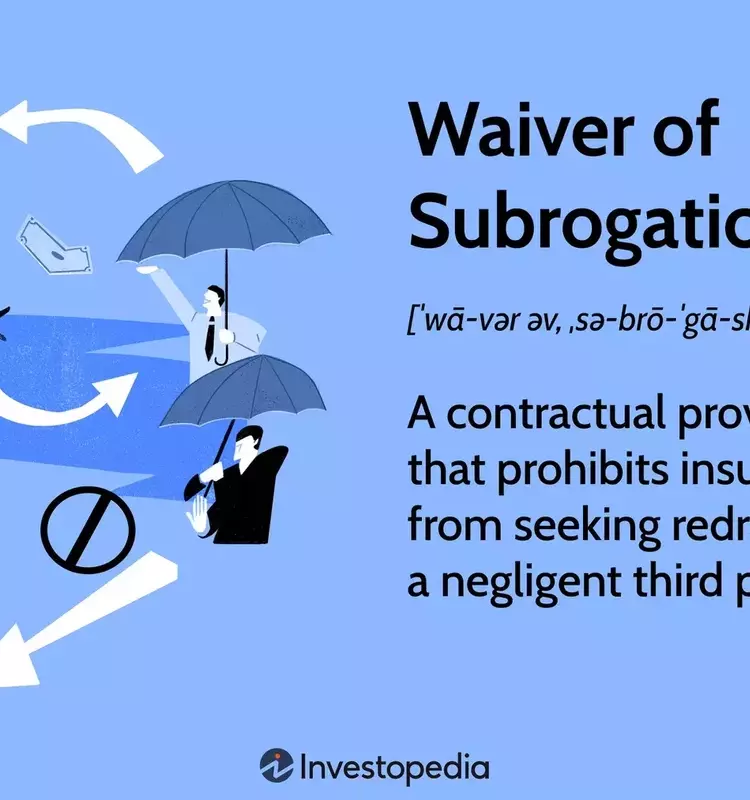
A waiver of subrogation is a key provision within an insurance policy, designed to preclude the insurer from seeking recompense from another party potentially liable for a loss that has been compensated under the policy. Insurers often levy an additional premium for this particular endorsement, reflecting the heightened risk they assume by relinquishing their right to recover funds from a negligent third party. This clause is prevalent in various contractual agreements, notably in construction and leasing, where it serves to avert protracted legal battles that could otherwise disrupt ongoing professional relationships.
Subrogation, in its essence, empowers an insurance provider to step into the shoes of its policyholder after a claim has been settled. This allows the insurer to pursue legal action against other parties to recuperate the costs incurred from the payout, even if the claim initially involved the insured party. However, when a waiver of subrogation is in effect, the insurer forfeits this right, meaning they cannot initiate legal proceedings against a third party after fulfilling a claim. This condition inherently increases the insurer's exposure to risk.
In the realm of construction, contracts frequently incorporate waivers of subrogation. These stipulations compel property owners to relinquish their right to sue contractors or subcontractors for damages covered by insurance. Consequently, the owner's insurer agrees to cover these losses without attempting to reclaim funds from the party deemed negligent. Nevertheless, such waivers are not absolute; exceptions may arise if the property insurance fails to cover a specific risk, or if the extent of the loss surpasses the policy's maximum coverage, thereby permitting the owner to seek redress from the responsible party. These clauses are instrumental in preventing project delays and cost escalations that often stem from disputes and litigation, preserving the project's integrity by avoiding time-consuming investigations into fault.
Similarly, in landlord-tenant agreements, waivers of subrogation operate to shield both parties from burdensome litigation. Should an insured event occur, the injured party's insurer pays the claim, but cannot then pursue legal action against the other contracting party. For instance, if a tenant's guest is injured due to a falling light fixture, or the tenant's valuable possessions are damaged, the tenant's insurance provider is barred from seeking recovery from the landlord if a waiver is in place. While some leases feature mutual waivers, where both landlord and tenant forgo recovery rights against each other for insured losses, it's worth noting that statutory laws in certain jurisdictions may override these waivers, although most states uphold such limitations of liability.
In the context of automobile insurance, waivers of subrogation may appear when an at-fault party attempts to settle claims directly with the injured party, bypassing their insurers. By accepting and signing such a waiver, the injured party and their insurer agree not to pursue further claims against the at-fault party beyond the agreed settlement. This prevents future claims and recovery efforts. Such decisions warrant careful consideration, often necessitating consultation with an attorney or the insurance provider to fully understand the implications. The inclusion of a waiver of subrogation is primarily driven by the desire to avoid lengthy and expensive legal confrontations, streamline the claims process, and maintain harmonious relationships between contractual parties.
A waiver of subrogation is a legal instrument that safeguards an insurer from recouping funds from a negligent third party after a claim payout. This mechanism is especially vital in contractual activities, such as property leasing or construction subcontracting, where it helps circumvent protracted and costly legal battles. While commonly found in construction, leasing, and auto insurance policies, it is important to remember that insurers may adjust premiums to account for the increased risk associated with the forfeiture of their subrogation rights. Understanding the nuances of these waivers is crucial for all parties involved in such agreements.
