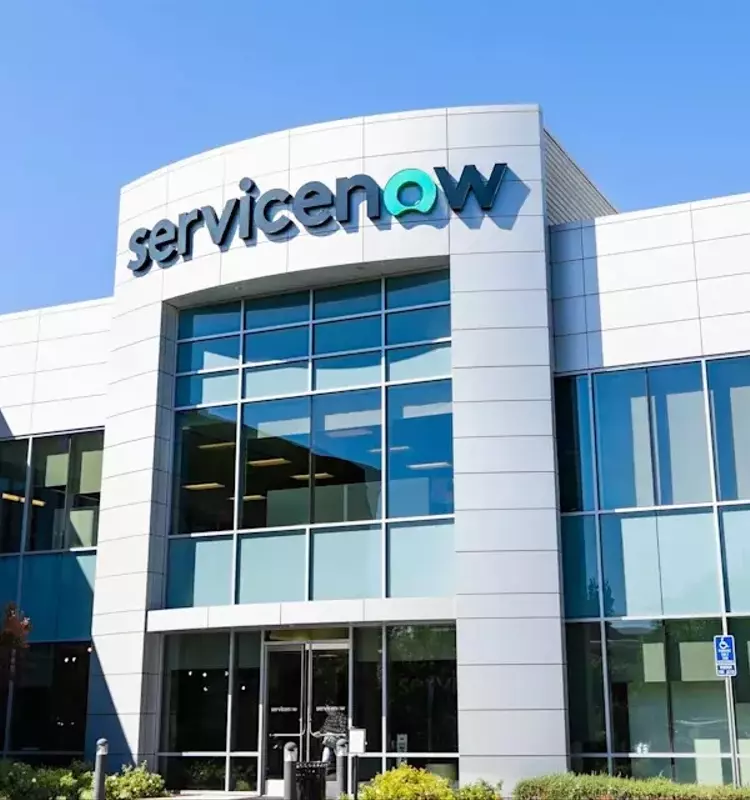
ServiceNow recently delivered an impressive financial performance for its second quarter, surpassing the market's forecasts. Bank of America has since reaffirmed its optimistic outlook on the software company, maintaining a 'Buy' recommendation and setting a target price of $130 per share. This target suggests a substantial potential increase of approximately 36% from the stock's value noted in BofA's July 23rd analysis. The core of this positive assessment lies in ServiceNow's distinctive artificial intelligence capabilities, particularly its ability to leverage vast internal data to enhance AI agent performance and address complex business challenges more effectively.
ServiceNow's AI Agents: A Deep Dive into Their Distinctive Capabilities
On July 24, 2026, Bank of America's analyst, Tal Liani, highlighted a crucial, often overlooked aspect of ServiceNow's AI strategy. While ServiceNow's second-quarter subscription revenue soared by 24.5% to $3.88 billion and its current remaining performance obligations (CRO) increased by 21% to $13.2 billion—both exceeding Wall Street's projections—Liani pointed out that the true differentiator lies in ServiceNow's AI agents. These agents benefit immensely from the company's existing repository of workflow histories and infrastructure records. This internal data wealth allows ServiceNow's AI to provide contextual solutions to intricate enterprise problems, which often lack straightforward, documented answers.
For instance, tackling an application outage requires more than just following a predefined script. An AI agent might need to identify associated servers, review recent configuration changes, understand interdependencies with other services, and ascertain who has the authority for repairs. ServiceNow's Configuration Management Database (CMDB), which meticulously maps applications, servers, and their relationships, combined with its Context Engine, which integrates human roles, policies, and past decisions, empowers its AI agents to navigate such complex scenarios. This integrated approach significantly reduces the need for extensive data integration steps that third-party AI products typically require, thereby streamlining deployment and reducing operational complexity. The company's AI products have already surpassed $1 billion in annual contract value, with the number of customers utilizing its agentic AI in production increasing ninefold over the last nine months. Furthermore, upgrades to AI-native packages are driving price increases of 20% to 30%, indicating strong market adoption.
However, the journey for ServiceNow's AI is not without its hurdles. Key questions remain regarding the consistent reliability of its AI agents, customers' willingness to further expand their usage, and the company's capacity to offset the rising costs associated with running AI workloads. The second quarter saw a dip in gross margin to 77.9% from 81% a year prior, missing BofA's 79.3% estimate. This reduction signals that a larger portion of revenue is being allocated to product delivery costs, primarily due to increased AI adoption and the use of hyperscaler infrastructure. Despite these cost pressures, ServiceNow managed to maintain its full-year operating-margin forecast at 31.5% by offsetting expenses with stronger subscription revenue and strategic spending timing. The company forecasts third-quarter subscription revenue between $3.975 billion and $3.980 billion, slightly below analysts' expectations, partly due to some federal contract revenue being recognized earlier than anticipated.
Ultimately, ServiceNow's long-term success hinges on its ability to demonstrate that its AI agents can consistently resolve complex issues both accurately and cost-effectively, thereby expanding customer usage without further eroding gross margins. Bank of America's continued confidence underscores the potential, but also highlights the ongoing tests and strategic management required for this AI-driven growth.
