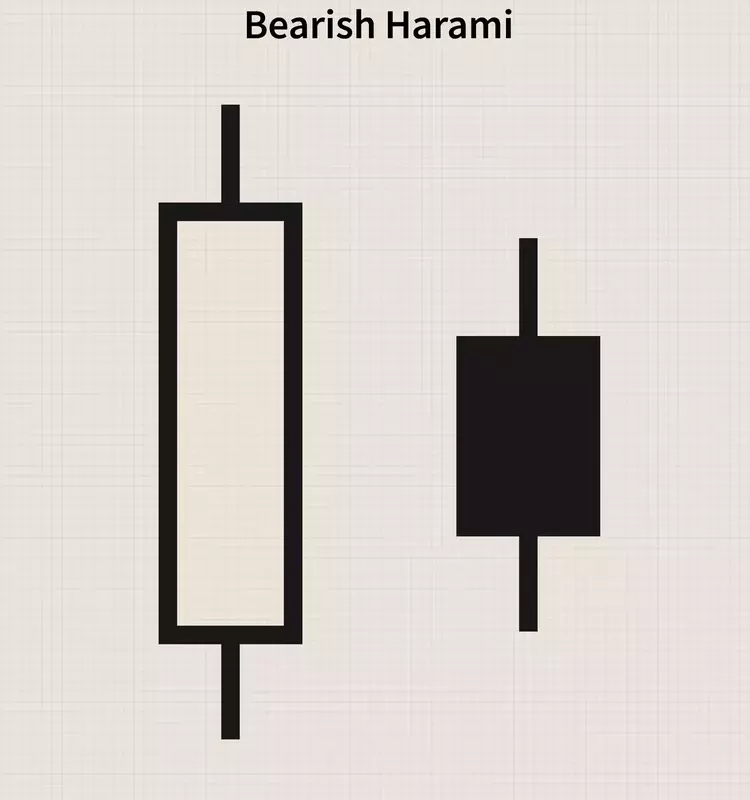
The bearish harami is a significant candlestick pattern for traders seeking to identify potential downward reversals in an upward price movement. This pattern, named for its resemblance to a pregnant woman in Japanese, appears when a large bullish candle is followed by a smaller bearish candle, whose body is entirely contained within the body of the preceding bullish candle. This configuration suggests a weakening of bullish momentum and a potential shift towards bearish sentiment.
To enhance the reliability of the bearish harami signal, traders commonly integrate it with other technical analysis tools. Indicators such as the Relative Strength Index (RSI) or stochastic oscillator can provide confirmation, particularly when they signal overbought conditions in conjunction with the harami pattern. Furthermore, considering broader market trends, often identified using tools like the 200-day moving average, can help validate the reversal potential indicated by the bearish harami. Trading strategies based on this pattern often involve initiating a short position when the price falls below the harami candle, with stop-loss orders placed strategically above the pattern to manage risk.
The bearish harami, while a potent signal, should not be the sole basis for trading decisions. Successful trading strategies leverage multiple indicators and consider the overall market context. By combining the insight from the bearish harami with corroborating signals from other technical tools and a comprehensive understanding of market trends, traders can significantly improve their decision-making and risk management, leading to more favorable outcomes. This integrated approach ensures a robust and cautious trading methodology, emphasizing prudence and informed action.
