Bootstrap Your Business: The Art of Self-Funding for Entrepreneurs
Finance

Bootstrap Your Business: The Art of Self-Funding for Entrepreneurs

authorBy Strive Masiyiwa
DateApr 30, 2026
Read time2 min

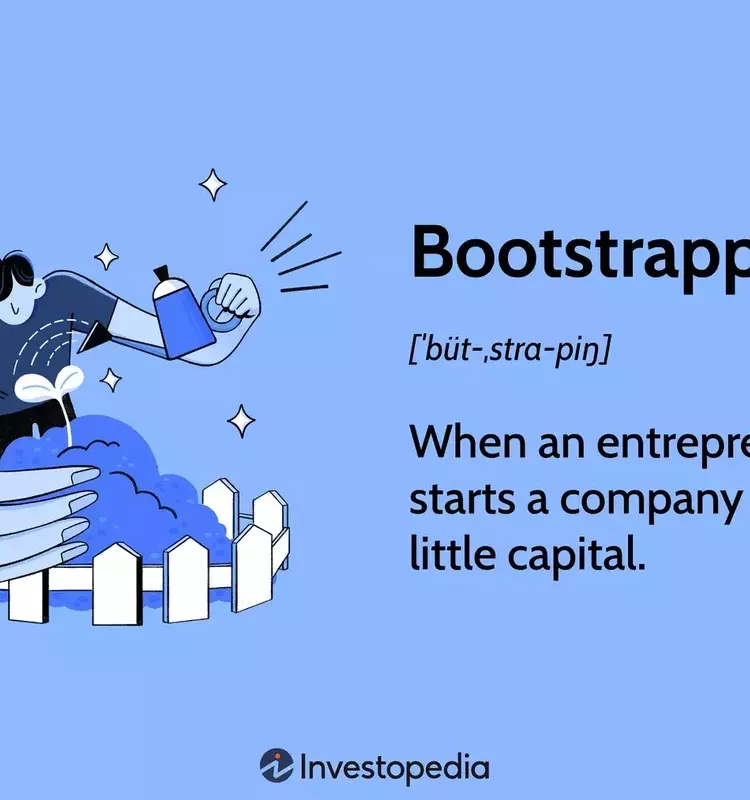
Entrepreneurs frequently initiate their ventures with limited capital, a process known as bootstrapping, wherein personal funds or business revenue drive expansion rather than external investments. This method grants founders complete autonomy over their company's direction, although it introduces substantial financial risks due to restricted resources.

Bootstrapping a company involves establishing it from the ground up with minimal initial assets. Founders often employ their personal savings, reinvest profits, streamline operations, accelerate inventory turnover, and manage a lean cash flow to ensure success. This self-funding approach offers entrepreneurs full control over decision-making, a significant advantage over relying on venture capitalists or angel investors. However, it also carries increased financial exposure for the entrepreneur and may not provide sufficient capital for rapid expansion. Individuals typically resort to external funding when they have a proven track record or an innovative idea that promises high returns, attracting profitable investments.

Various strategies can be employed when bootstrapping a business. Entrepreneurs can contribute personal equity, take on personal debt, or meticulously cut costs. For instance, an owner might personally deliver products to customers in the local area to avoid delivery fees, thereby trading time for capital. Furthermore, businesses can form strategic relationships, engaging third parties or investors for short-term financing agreements rather than long-term investments. Limiting business operations, such as manufacturing items only upon receiving paid orders or focusing on specific geographical areas due to shipping constraints, also serves as an effective bootstrapping strategy. While bootstrapping allows entrepreneurs to retain control and promote cost-efficiency, it also presents challenges like increased financial risk and potential negative perceptions from customers or investors due to limited resources.

The journey of launching a new business rarely unfolds without financial hurdles, underscoring the crucial role of innovative and resourceful solutions. Many successful companies, such as Amazon and Meta, began with humble, bootstrapped origins, proving that with strategic planning and unwavering dedication, entrepreneurs can overcome initial capital limitations and achieve remarkable growth. Embracing creativity and resilience in managing resources not only builds a strong foundation but also instills a profound sense of accomplishment and ownership.

More Articles
Finance
Understanding Foreign Exchange Reserves
Foreign exchange reserves are a critical component of a nation's financial stability, held by central banks in various foreign assets like currencies and government securities. These reserves act as a safeguard against economic shocks, currency devaluation, and support a country's monetary policy. This article explores their significance, typical compositions, and real-world examples, highlighting how countries like China and Saudi Arabia strategically manage these assets for economic resilience.
By Morgan HouselApr 30, 2026
Finance
Understanding Prepackaged Bankruptcy: A Swift Path to Financial Reorganization
This article explores prepackaged bankruptcy, a strategic approach where a company negotiates with creditors to restructure finances before formally filing for Chapter 11. This method aims to expedite the bankruptcy process, reduce costs, and facilitate a quicker emergence from financial distress, as evidenced by real-world examples like Neiman Marcus and J. Crew.
By Morgan HouselApr 30, 2026
Finance
Gaming and Leisure Properties: Re-evaluating Investment Outlook to Hold
This analysis shifts the recommendation for Gaming and Leisure Properties, Inc. (GLPI) from "Buy" to "Hold." While GLPI maintains a favorable investment spread and exhibits defensive characteristics like consistent rent collection and low beta, its current valuation appears fair when weighed against invested capital. Concerns regarding tenant concentration, non-investment grade exposure, and a compressed implied cap rate spread relative to Treasuries warrant a more cautious stance on future upside potential.
By Strive MasiyiwaApr 30, 2026
Finance
Rising Inflation Concerns in Bond Markets Due to Middle East Tensions
The bond market is increasingly signaling concerns about persistent inflation risks stemming from geopolitical tensions in the Middle East. Key Treasury yields are experiencing significant increases, approaching levels seen during previous periods of high inflation. This shift suggests a growing belief that the Federal Reserve's current wait-and-see monetary policy may need to be reassessed as market-implied inflation forecasts also show an upward trend.
By Fareed ZakariaApr 30, 2026
Finance
Understanding Consolidated Financial Statements: A Comprehensive Guide
Consolidated financial statements combine the financial data of a parent company and its subsidiaries into a single set of reports, offering a holistic view of the entire group's financial health. This guide delves into their functionality, key considerations, reporting requirements, and provides real-world examples, highlighting their importance for transparency and compliance in financial reporting.
By Fareed ZakariaApr 30, 2026