Expatriates: Navigating Life and Finances Abroad
Finance

Expatriates: Navigating Life and Finances Abroad

authorBy Suze Orman
DateMay 05, 2026
Read time2 min

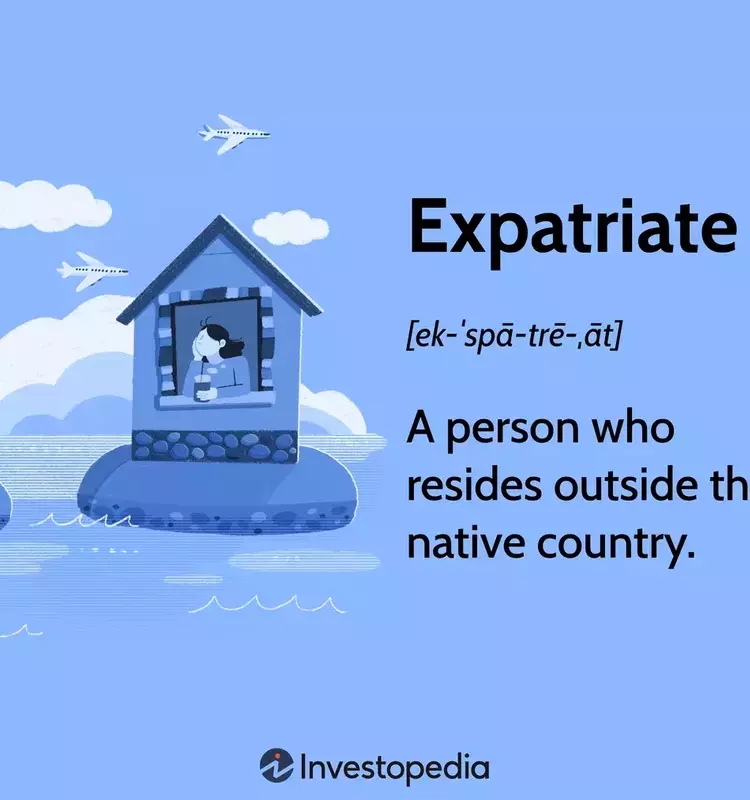
An expatriate, commonly referred to as an expat, is an individual who chooses to reside in a foreign nation for an extended duration, typically motivated by employment opportunities or retirement. This lifestyle offers unique advantages, such as exposure to diverse cultures and potentially a reduced cost of living, particularly appealing to retirees seeking a more economical or relaxed way of life. However, it also involves navigating intricate tax systems, adapting to new social norms, and managing the emotional impact of being far from one's native country.

Moving abroad, whether for work or retirement, necessitates careful financial planning and a thorough understanding of international tax laws. For example, American citizens living overseas are still subject to U.S. income taxes, regardless of where their earnings originate. To mitigate the burden of double taxation, the U.S. tax code provides provisions like the Foreign Earned Income Exclusion (FEIE), which allows expats to exclude a portion of their foreign-earned income, and the Foreign Tax Credit (FTC), which offers a dollar-for-dollar credit for taxes paid to a foreign government. These mechanisms help ensure that individuals are not taxed twice on the same income, though investment income may be treated differently. Additionally, those who choose to renounce their U.S. citizenship face an expatriation tax, a significant consideration given the financial and legal complexities involved.

The decision to become an expatriate involves weighing various benefits and drawbacks. On the positive side, expats can enjoy new adventures, access to different healthcare systems, and potentially a higher quality of life due to lower living expenses. Some countries even offer attractive government benefits like free healthcare and education. Conversely, challenges include maintaining connections with family and friends across time zones, overcoming language and cultural barriers, and dealing with the logistical hurdles of securing visas and permits. The stability of the chosen country, both politically and economically, is another crucial factor to assess before committing to an expatriate lifestyle. Ultimately, careful research and perhaps even exploratory visits are recommended before making such a significant life change.

Embracing an expatriate lifestyle, whether for career advancement or a peaceful retirement, embodies a spirit of adventure and adaptability. It challenges individuals to broaden their horizons, fosters a deeper understanding of global cultures, and often leads to a richer, more diverse life experience. By proactively addressing the financial and logistical complexities, and by maintaining a positive and open-minded approach, expatriates can build fulfilling lives that transcend geographical boundaries, contributing to a more interconnected and understanding world.

More Articles
Finance
Palantir's Stellar Q1 Performance: Growth Outpaces Peers, Yet Valuation Concerns Persist
Palantir Technologies Inc. (PLTR) recently announced outstanding first-quarter earnings, with revenue soaring over 80% year-over-year, significantly surpassing analyst expectations. Despite this impressive operational growth, the company's shares did not see a corresponding rally, primarily due to lingering concerns about its high valuation. While the strong results demonstrate robust business momentum, the elevated stock price suggests a neutral outlook for immediate gains.
By David RubensteinMay 05, 2026
Finance
Understanding Demand Drafts: A Secure Payment Mechanism
This article explores demand drafts, a secure bank-issued payment method ensuring funds are available. It details their operation, acquisition process, and compares them with checks, wire transfers, and online payment systems, highlighting their role in secure transactions despite less flexibility.
By Mariana MazzucatoMay 04, 2026
Finance
Putnam Focused Large Cap Value ETF: An Unconventional Gem in Value Investing
Putnam Focused Large Cap Value ETF (PVAL) distinguishes itself through active, high-conviction stock selection, prioritizing undervalued companies with robust future cash flow growth. Despite an expense ratio of 0.55% and a low 1% yield, PVAL consistently outperforms its value counterparts and even the S&P 500, demonstrating superior risk-adjusted returns and lower drawdowns. Its success hinges on an experienced management team and a strong analyst pool, with potential resource enhancements following the Franklin Templeton acquisition.
By Robert KiyosakiMay 04, 2026
Finance
Optimizing Business Operations with Enterprise Resource Planning (ERP)
Enterprise Resource Planning (ERP) systems streamline and integrate core business functions such as finance, operations, and human resources into a single platform. This technology enhances communication, improves data visibility, and boosts efficiency. The article explores various ERP types, their benefits, and implementation considerations, emphasizing the importance of aligning the system with organizational culture for successful integration.
By Nouriel RoubiniMay 04, 2026
Finance
Palantir's Q1 2026 Earnings: Strong Growth and Strategic Expansion
Palantir Technologies Inc. (PLTR) reported exceptional Q1 2026 earnings, showcasing significant growth in key financial metrics, including record margins and revenue expansion. The company's strategic integration within the U.S. national security framework, alongside a growing commercial client base, positions it for continued hypergrowth. Despite potential risks related to growth deceleration and valuation, a robust contract pipeline and optimistic forecast revisions suggest sustained outperformance.
By Suze OrmanMay 04, 2026