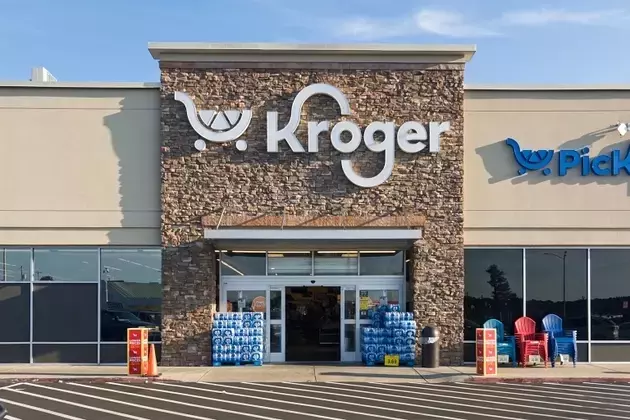
Kroger (KR) recently experienced a post-earnings decline, leading to an upgrade to a "Buy" rating. This re-evaluation highlights that the current stock price offers a substantial safety margin, particularly as the company undertakes strategic business enhancements. Despite facing broader economic headwinds, Kroger remains committed to its 2026 financial projections: achieving 1-2% identical sales growth, an earnings per share (EPS) between $5.10 and $5.30, and generating $2.7 billion to $2.9 billion in free cash flow. The company's new leadership is proactively pursuing price reductions to strengthen its competitive position and drive sustained expansion, utilizing a dual approach that integrates both digital and physical retail channels.
An intrinsic value analysis suggests that Kroger's shares are currently trading below their fair market value, making them an appealing investment opportunity with a favorable risk-reward profile. The strategic focus on price competitiveness and an omnichannel growth model are expected to contribute to long-term value creation. These factors, combined with the company's consistent financial outlook, position Kroger as a compelling investment following its recent market adjustment.
Kroger's Strategic Repositioning and Future Outlook
Kroger's recent stock performance, marked by a dip after its latest earnings announcement, has created a compelling entry point for investors, prompting an upgrade to a "Buy" rating. The current valuation provides a significant margin of safety, implying that the market may be undervaluing the company's long-term potential. This positive outlook is further bolstered by Kroger's unwavering commitment to its ambitious 2026 financial guidance. The company projects a 1-2% identical sales growth, earnings per share (EPS) in the range of $5.10 to $5.30, and robust free cash flow (FCF) between $2.7 billion and $2.9 billion. These targets remain firm despite persistent macroeconomic challenges, demonstrating management's confidence in their strategic direction and operational resilience.
A key driver of this optimism is the new CEO's proactive approach, which centers on implementing price reductions. This strategy is designed not only to boost sales volumes but also to establish a distinct competitive advantage in the long run. By making its offerings more accessible, Kroger aims to deepen customer loyalty and expand its market share. This pricing strategy is seamlessly integrated with a comprehensive expansion plan that leverages both digital platforms and traditional brick-and-mortar stores. This hybrid model ensures a broad reach, catering to diverse consumer preferences and optimizing operational efficiency. The combination of strategic pricing, a robust omnichannel presence, and disciplined financial management positions Kroger for sustainable growth and enhanced shareholder value.
Intrinsic Value and Investment Appeal
The reassessment of Kroger's intrinsic value reveals that the company's shares are currently trading below their true economic worth, presenting an attractive opportunity for investors seeking value. This favorable risk-reward scenario is a direct result of the recent post-earnings selloff, which appears to have created a temporary undervaluation in the market. The company's steadfast 2026 guidance, which includes projections for 1-2% identical sales growth, an EPS of $5.10-$5.30, and FCF of $2.7B-$2.9B, underscores its fundamental strength and operational stability. Despite ongoing macroeconomic uncertainties, these consistent financial targets provide a clear roadmap for future performance and underpin the confidence in the stock's long-term potential.
Under the leadership of its new CEO, Kroger is strategically executing price cuts to foster long-term differentiation and accelerate growth. This initiative is complemented by a sophisticated mixed expansion strategy, which thoughtfully combines the reach and convenience of digital channels with the established presence of brick-and-mortar locations. This integrated approach is designed to enhance customer engagement, optimize supply chains, and adapt to evolving consumer behaviors. The synergy between these strategic moves and the company's solid financial foundation indicates that Kroger is well-positioned to unlock significant value. The current market price, therefore, offers a compelling entry point for investors looking to capitalize on a fundamentally strong company with clear growth catalysts and a favorable risk-reward balance, as its intrinsic value is estimated to be considerably higher than its present market valuation.
