Mastering Personal Finances: The Essential Guide to Spending Plans
Finance

Mastering Personal Finances: The Essential Guide to Spending Plans

authorBy David Rubenstein
DateJul 24, 2026
Read time2 min

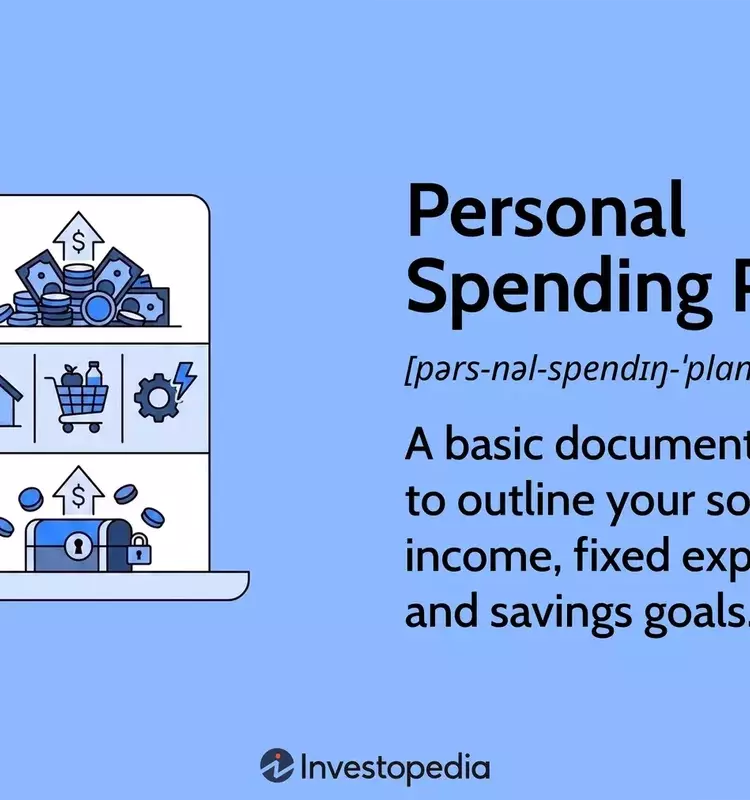
A personal spending plan is a crucial tool for financial management, offering a detailed overview of an individual's or household's income and expenses. Unlike a conventional budget, it delves deeper into spending habits, helping to distinguish between needs and wants. This proactive approach to financial planning enables individuals to monitor their cash flow, identify spending patterns, and make informed decisions to achieve their financial aspirations. By integrating a spending plan with clearly defined financial goals, individuals can effectively manage their money, live within their means, and build a more secure financial future.

Understanding the intricacies of a personal spending plan is key to effective financial stewardship. While most people are aware of their income sources, many lack insight into where their money is actually allocated. A spending plan addresses this by requiring meticulous documentation and categorization of all expenditures. This detailed approach allows individuals and families to pinpoint areas where funds might be diverted from savings or investments, thereby hindering their financial progress. For instance, a family might implement a household spending plan to track each member's outlays, identify potential savings, and optimize their collective financial strategy.

The establishment of clear financial objectives is paramount to the success of a personal spending plan. Whether it's saving for a dream vacation, making a down payment on a house, or investing for retirement, these goals provide direction for how income should be allocated between living expenses and savings. While professional financial planners can offer guidance, creating a spending plan can be as straightforward as utilizing a simple spreadsheet or an online money tracking application. The essential element is a commitment to meticulously record all spending, from groceries and school fees to entertainment, to ensure an accurate reflection of financial activity.

Before initiating a spending plan, financial experts often suggest that individuals or households track all their expenditures for one to two months. This initial period of observation provides valuable insights into actual spending habits, allowing for the creation of more realistic and achievable financial goals. Recognizing that most individuals operate on a fixed income, accepting this reality is fundamental to fostering a healthier financial lifestyle. Spending beyond one's means often leads to accumulated debt, which can be a costly burden. By diligently tracking income and expenses, individuals can take control of their finances, ensure responsible spending, and incrementally build an emergency fund. This fund, ideally covering at least three months' worth of expenses, serves as a financial safety net, reducing reliance on credit in unforeseen circumstances and paving the way for greater financial stability.

More Articles
Finance
Bank of America Highlights ServiceNow's Unique AI Advantage Amid Strong Q2 Performance
Bank of America has reaffirmed its 'Buy' rating for ServiceNow, raising its price target to $130, signaling a 36% upside. This endorsement follows ServiceNow's robust second-quarter results, which surpassed Wall Street expectations with significant growth in subscription revenue and contract obligations. A key insight from BofA emphasizes ServiceNow's distinctive AI advantage stemming from its extensive internal data, enabling its AI agents to tackle complex enterprise issues more efficiently than external solutions.
By Fareed ZakariaJul 24, 2026
Finance
Utility Revenue Bonds: Funding Essential Public Services
Utility revenue bonds are a type of municipal bond used to finance public utility projects. Repayment to bondholders is directly sourced from the revenues generated by these projects, rather than general tax funds. These bonds often feature a net revenue pledge, prioritizing operational and maintenance costs before debt repayment. Investors assess these bonds using metrics like coverage ratio, population trends, and customer concentration to gauge their viability and risk.
By Mariana MazzucatoJul 24, 2026
Finance
Understanding the Concept of a Narrow Economic Moat
A narrow economic moat describes a business that possesses only a slight competitive edge over its industry rivals. Unlike a wide economic moat, which denotes a significant and enduring advantage, a narrow moat offers limited economic benefits and is typically short-lived due to intense competition. This concept, popularized by investor Warren Buffett, highlights the challenges companies face in highly competitive sectors with low barriers to entry and minimal intellectual property protection.
By Robert KiyosakiJul 24, 2026
Finance
American Airlines: Navigating Fuel Price Volatility and Bridging the Profitability Gap
Despite recent stock market fluctuations, American Airlines recorded impressive Q2 revenue. The company is actively addressing a significant profit disparity compared to its competitors through strategic growth initiatives, particularly in its loyalty program. While facing a projected surge in fuel costs by 2026, the airline's stock currently presents a compelling valuation relative to its future earnings potential, signaling an optimistic long-term outlook for investors.
By Strive MasiyiwaJul 24, 2026
Finance
Tarsus Pharmaceuticals: Overcoming Sales Dip and Anticipating Future Growth
Tarsus Pharmaceuticals, Inc. experienced its first sales decline for Xdemvy in Q1'26 since its launch, yet management remains confident in achieving its 2026 net sales guidance of $670M–$700M, supported by promising Q2'26 prescription data. The recent acquisition of iRenix Medical adds IRX-101 to its pipeline, diversifying its offerings. Furthermore, upcoming H1'27 trial readouts for Lyme disease prevention and ocular rosacea present significant catalysts for future expansion, all while the company maintains a robust cash position.
By Fareed ZakariaJul 24, 2026