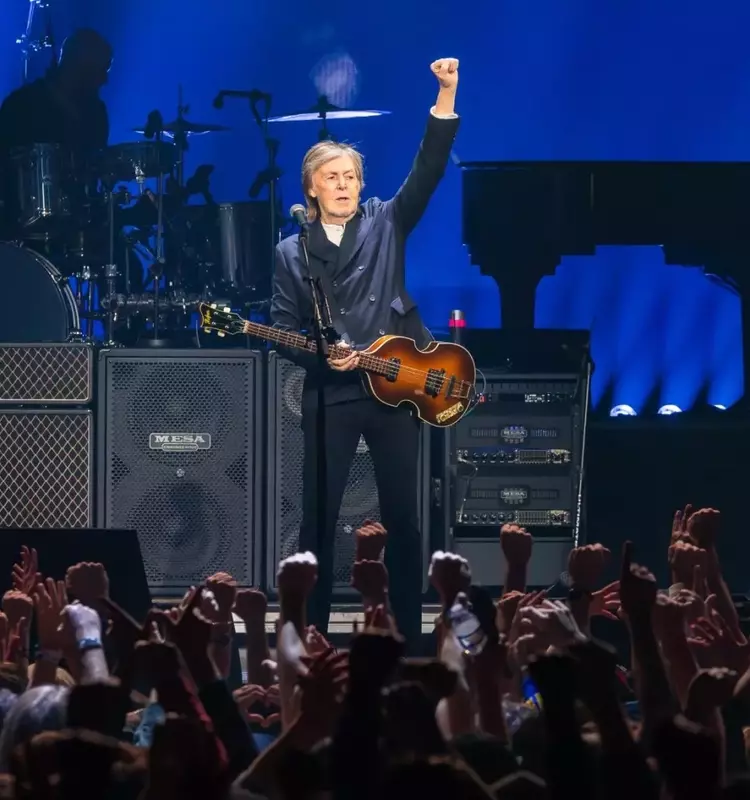
Paul McCartney's recent Nashville stop on his 'Got Back' Tour was an exceptional event, seamlessly weaving together iconic hits from his illustrious career, spanning the Beatles, Wings, and his solo work. The concert, held at the intimate Pinnacle venue, underscored McCartney's lasting appeal and his unique ability to connect with audiences across generations.
A notable moment arrived with the performance of "Now and Then," featuring John Lennon's posthumous contribution. This segment, enhanced by innovative visuals, created a surreal yet poignant experience, blurring the lines between past and present. McCartney's extensive setlist, comprising over 30 songs, showcased his incredible versatility and ongoing relevance, delighting fans with both beloved anthems and deeper cuts. The concert also featured a powerful rendition of George Harrison's "Something," initially performed solo on ukulele before expanding into a full band arrangement, demonstrating McCartney's deep respect for his bandmates' legacies. The Nashville audience, a diverse mix of long-time Beatles enthusiasts and younger fans, was also treated to a vibrant selection of Wings' tracks, which brought a distinct energy to the evening. From the explosive "Jet" to the funky "Let Me Roll It" and the dramatic "Live and Let Die," these songs illustrated the creative breadth of his post-Beatles career.
Beyond the musical brilliance, McCartney used his platform to foster a sense of community and promote positive values. Engaging directly with the audience, he addressed a fan's coming-out message with warmth and encouragement. He also shared a significant historical anecdote about the Beatles' refusal to perform at a segregated concert, emphasizing their commitment to equality. The show concluded with a powerful message of unity, culminating in an encore featuring a medley of tracks from 'Abbey Road' and a display of various flags, including a Pride flag. This heartfelt finale, coupled with McCartney’s recitation of the Beatles' enduring lyric, "In the end, the love you take, is equal to the love you make," left the audience with a profound sense of hope and connection.
Paul McCartney continues to stand as a beacon of artistic integrity and positive influence, demonstrating that music's power extends beyond entertainment to inspire unity and champion love in an often-divided world. His concerts are not merely performances but celebrations of enduring artistry and timeless messages.