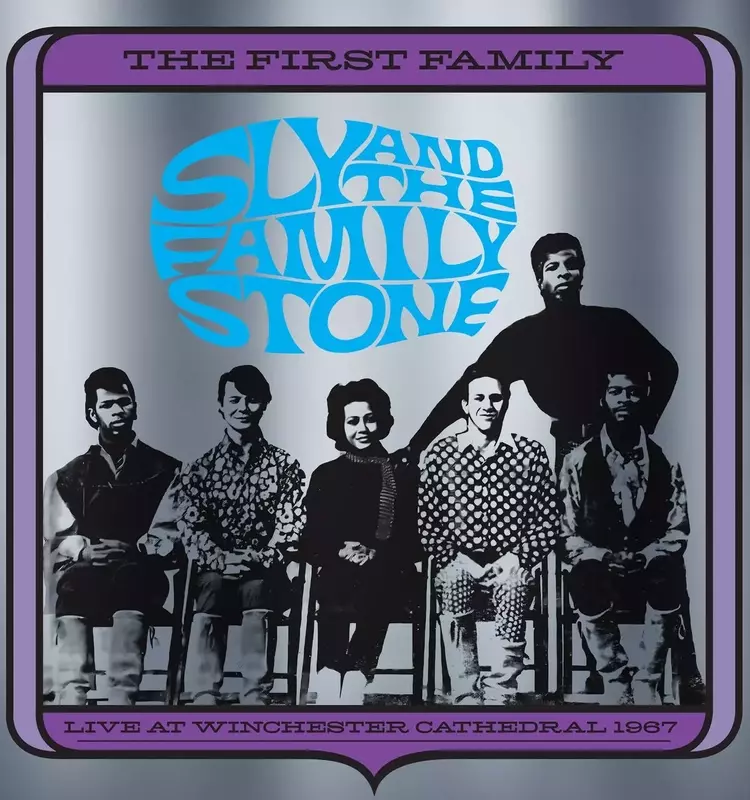
“The First Family: Live at the Winchester Cathedral 1967” provides a captivating look into Sly and the Family Stone's early sound, predating their seminal work. This archival release captures the band's raw energy and exceptional musicianship in a live setting, revealing their strong foundation in soul music before their groundbreaking psychedelic innovations. The recording sheds light on their evolution, showcasing a group on the brink of widespread recognition, and emphasizes their dynamic, audience-engaging performances deeply rooted in their gospel upbringing. It serves as a vital historical document, enriching the understanding of their foundational years.
This album’s significance is further amplified as the first posthumous release from Sly Stone, offering fans and scholars alike an opportunity to connect with his artistry from a nascent stage. While the sound quality might not be pristine, it authentically conveys the vibrant atmosphere of a 1967 performance, highlighting the band’s compelling stage presence and their ability to forge a profound connection with the audience. The collection is more than just a musical offering; it’s a portal to a bygone era of live music, where skill and spontaneous energy reigned supreme.
The Genesis of a Soul Powerhouse
“The First Family: Live at the Winchester Cathedral 1967” serves as a pivotal document, capturing Sly and the Family Stone in a crucial developmental phase, just on the cusp of their groundbreaking stylistic evolution. Recorded mere months before their debut album, “A Whole New Thing,” this live performance highlights the group’s foundational prowess as an exceptional soul band, displaying a captivating energy that was beginning to hint at the innovative, progressive soundscapes they would soon forge. The setlist largely comprises compelling interpretations of popular soul tracks of the era, reflecting the prevailing musical landscape and the band's mastery of contemporary hits. Only one original song, “I Ain't Got Nobody (For Real),” which would later appear on their iconic “Dance to the Music” album, provides a glimpse into their burgeoning songwriting talent. This snapshot illuminates their journey from skilled cover artists to visionary pioneers, showcasing their inherent talent and the fervent live experience that captivated early audiences.
This release is particularly noteworthy as the inaugural archival offering since Sly Stone's passing, holding considerable weight for enthusiasts who have long cherished these rare recordings. Although snippets have circulated informally for years, and parts featured in Questlove's recent documentary, the full experience presented here is designed to provide a comprehensive understanding of their nascent stage. High Moon Recordings, known for unearthing significant hippie-era rarities, delivers this album with an accompanying booklet that delves into the band’s history preceding “Dance to the Music.” This contextual information explicitly states that the Winchester Tapes capture a period before their meteoric rise to fame, focusing instead on their pre-crossover development. The recording vividly illustrates how Sly and his band, rooted in a Pentecostal church tradition, translated that powerful, communal “holding church” atmosphere into their secular performances, demonstrating an extraordinary ability to engage and move their audience with infectious zeal and deep musicality.
A Communion of Sound: Performance and Purity
On “The First Family,” the collective energy between the performers and the audience transforms the live recording into a genuine communion of sound, perfectly embodying Sly Stone's philosophy of music as a shared, church-like experience. Despite the surprisingly seated nature of the concert, the sheer vitality of the band's performance, particularly during a dazzling rendition of Ben E. King's “What Is Soul?”, suggests an irresistible urge for the audience to transcend their chairs and participate actively. This powerful engagement is palpable throughout the album, creating an immersive atmosphere where claps and vocal approvals from the crowd become an integral part of the musical tapestry. The album captures a moment in time when live music was transitioning from mere entertainment to an art form commanding serious respect, and the direct, unmediated interaction between Sly and his audience underscored this evolving appreciation for performance and shared emotional release.
A critical distinction of this early incarnation of the Family Stone is the absence of Sly's sister, Rose, whose distinctive and exuberant vocals would later become a hallmark of their communal sound. Her eventual inclusion was crucial in cultivating the utopian, all-hands-on-deck spirit that defined albums like “Dance to the Music” and “Life.” On “The First Family,” however, the communal aspect is primarily driven by the palpable enthusiasm of the audience, whose audible participation, especially during the eight-minute cover of the Four Tops' “Baby I Need Your Loving,” underscores the band’s immediate impact. While the sound fidelity, particularly concerning Sly’s vocals, leaves something to be desired, the raw, unpolished nature of the recording provides an authentic representation of a band operating in a world where musical skill and the ability to electrify a crowd with current hits were paramount. This era predated the sophisticated, studio-driven artistry that would soon emerge with albums like “Sgt. Pepper’s Lonely Hearts Club Band,” emphasizing a live music scene that valued immediate talent and dynamic stage presence above all else.