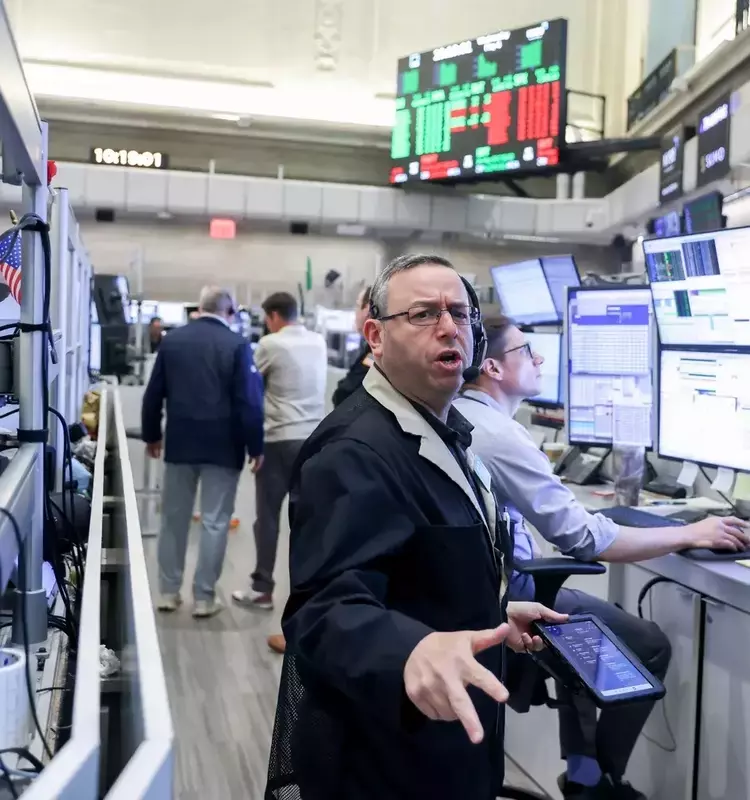
On Thursday, stock futures saw minor fluctuations, following a day of record-breaking performances from the S&P 500 and Nasdaq Composite, largely driven by the technology sector. Meanwhile, oil futures continued their downward trend, reacting to growing speculation of a peace deal between the U.S. and Iran, which had already caused a substantial drop in prices on Wednesday. This mixed market sentiment highlights a cautious approach by investors, balancing the strong momentum in tech stocks with potential shifts in global energy dynamics.
Technology-Led Market Surge and Futures Performance
In a notable market development, technology stocks were the primary catalysts behind the S&P 500 and Nasdaq Composite reaching new all-time highs for two consecutive days. This surge reflects strong investor confidence and robust earnings in the tech sector. On Wednesday, the Nasdaq, a key index for technology firms, jumped by 2%, while the broader S&P 500 rose 1.5%, and the Dow Jones Industrial Average climbed 1.2%, adding over 600 points. This impressive performance underscored the significant influence of tech giants, often referred to as the Magnificent Seven, with companies like Nvidia leading the charge with nearly a 6% advance. As a result, stock futures for these major indices showed minimal changes on Thursday, indicating that the market was largely digesting these gains and maintaining a wait-and-see attitude.
Despite the previous day's significant gains, futures contracts for the Dow Jones Industrial Average, S&P 500, and Nasdaq 100 all hovered around a 0.1% change in early trading on Thursday. This modest movement suggests a period of consolidation after the recent rally. Many of the Magnificent Seven tech companies, including Nvidia, continued to show positive signs in premarket trading, indicating sustained, albeit tempered, enthusiasm for the sector. While Nvidia, the world's most valuable company, saw a less than 1% increase before the opening bell, its consistent upward trajectory has been a key driver of the overall market's strength. This sustained interest in technology, combined with the conservative movement in futures, illustrates a market in transition—from rapid ascent to a more measured assessment of future growth prospects.
Crude Oil Retreats Amid Geopolitical Optimism and Broader Market Trends
The energy market, in stark contrast to the buoyant technology sector, experienced a significant downturn. West Texas Intermediate (WTI) and Brent crude futures continued to decline on Thursday, building on Wednesday's steep 7% drops. This retreat was primarily fueled by increasing optimism regarding a potential peace agreement between the U.S. and Iran, which could lead to an increase in global oil supply. Such a deal would ease geopolitical tensions and potentially bring more Iranian oil to the market, influencing global supply-demand dynamics and putting downward pressure on prices. The prospect of renewed oil flows from Iran contributed to a cautious outlook among energy traders, overshadowing other market considerations.
On Thursday, WTI futures, the benchmark for U.S. crude oil, saw a further 2.8% decrease, settling at $92.50 per barrel. Similarly, front-month contracts for Brent crude, the international benchmark, fell by 2.5% to $98.75. This continued slide reflects a strong market reaction to the geopolitical news, highlighting the sensitivity of oil prices to global events. Beyond the energy sector, broader market indicators also showed some movement: the 10-year Treasury yield, a critical benchmark for borrowing costs, slightly declined to 4.33% from its previous close of 4.35%. Gold futures, often seen as a safe-haven asset, rose by approximately 1% to $4,745 per ounce, while Bitcoin experienced a slight dip, trading around $81,100. The U.S. dollar index also edged down by 0.1% to 97.89, suggesting a general recalibration across various asset classes as investors reacted to the evolving economic and geopolitical landscape.
