Mastering the Market: Navigating Bid and Ask for Smarter Trades
Defining the Core Concepts: Bid and Ask Explained
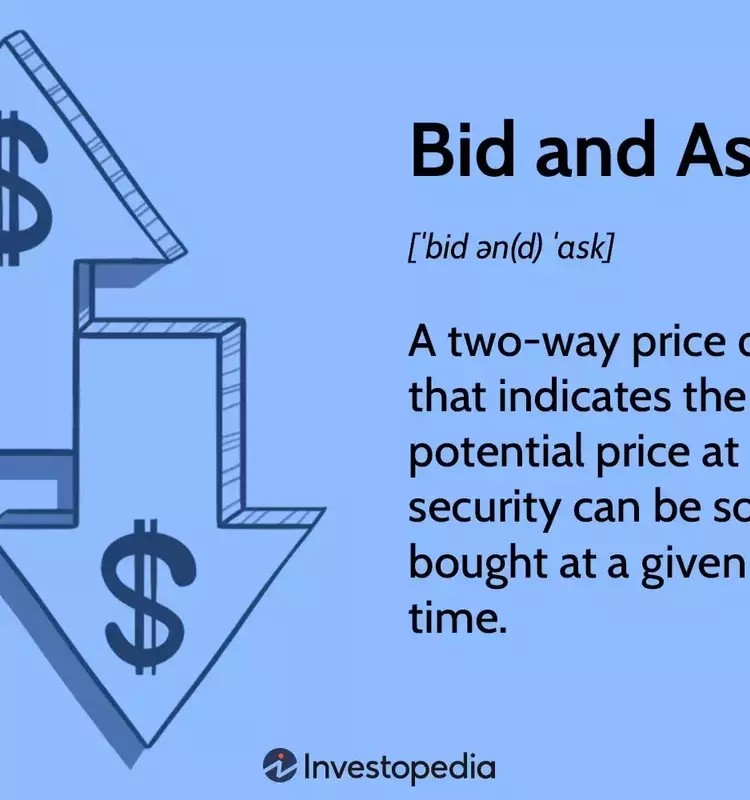
Bid and ask prices are fundamental components of how securities are exchanged in financial markets. The bid represents the maximum amount a buyer is prepared to pay for a security, while the ask (or offer) signifies the minimum amount a seller is willing to accept for that same security. The space between these two prices is known as the bid-ask spread, a key indicator of market liquidity and trading efficiency. Understanding this spread is essential for comprehending transaction costs and the speed at which trades can be executed.
The Operational Mechanics of Bid and Ask Prices in Trading
For the typical individual investor or retail trader, the bid-ask spread acts as an embedded cost of engaging in market activities. These participants are generally considered "market takers," meaning they typically sell at the existing bid price (where another party is ready to buy) and buy at the existing ask price (where another party is ready to sell). For instance, if a stock is quoted at $10.50 (bid) / $10.55 (ask), a buyer would pay $10.55, and a seller would receive $10.50.
Beneficiaries of the Bid-Ask Spread: The Role of Market Makers
The bid-ask spread primarily serves as a revenue source for market makers. A market maker, by quoting a stock at $10.50 / $10.55, expresses their readiness to purchase the stock at $10.50 and sell it at $10.55. The difference, or the spread, constitutes their profit. The magnitude of this spread can differ significantly based on the specific security and overall market conditions.
Factors Influencing Bid and Ask Spreads
For highly liquid assets, such as stocks of major corporations, the bid-ask spread might be just a few cents. Conversely, less actively traded small-cap stocks could exhibit wider spreads, potentially $0.50 or more. It's also important to note that the bid-ask spread can expand considerably during periods of market instability or reduced liquidity, as buyers become less willing to pay high prices and sellers less willing to accept low ones.
Distinguishing Bid Price from Ask Price
The bid price denotes the highest price at which buyers are currently willing to acquire a security, while the ask price is the lowest price at which sellers are prepared to part with it. A buyer aiming to acquire a stock would need to offer at least the ask price to complete the transaction at that moment. The divergence between these two prices is consistently referred to as the bid-ask spread.
The Significance of a Tight Bid-Ask Spread
When bid and ask prices are closely aligned, it generally signifies high liquidity for the security. Such a "narrow" bid-ask spread is advantageous for investors, enabling them to enter or exit positions, even substantial ones, with greater ease and efficiency. In contrast, securities with a "wide" bid-ask spread, characterized by a significant difference between bid and ask prices, can be more challenging and costly to trade.
The Dynamics of Bid and Ask Price Determination
Bid and ask prices are fundamentally shaped by market forces and the collective buying and selling decisions of individual and institutional investors. If demand surpasses supply, these prices will gradually trend upwards. Conversely, if supply exceeds demand, prices will drift downwards. The width of the bid-ask spread is directly influenced by the level of trading activity; higher activity typically results in narrower spreads, while lower activity leads to wider ones.
The Concluding Perspective on Bid and Ask
In financial markets, most quoted prices are dual, encompassing both a bid and an ask. The bid signifies the maximum price a buyer offers, and the ask (or offer) is the minimum price a seller accepts. This combined price quote, along with the spread between them, serves as a crucial indicator of a security's liquidity: a tighter spread signals greater liquidity. While retail traders typically transact at either the bid or ask, market makers actively establish these prices, thereby facilitating market operations and generating profit from the spread.
