Understanding Merchant Banks: Services, Operations, and Key Distinctions
Finance

Understanding Merchant Banks: Services, Operations, and Key Distinctions

authorBy Michele Ferrero
DateJul 22, 2026
Read time3 min

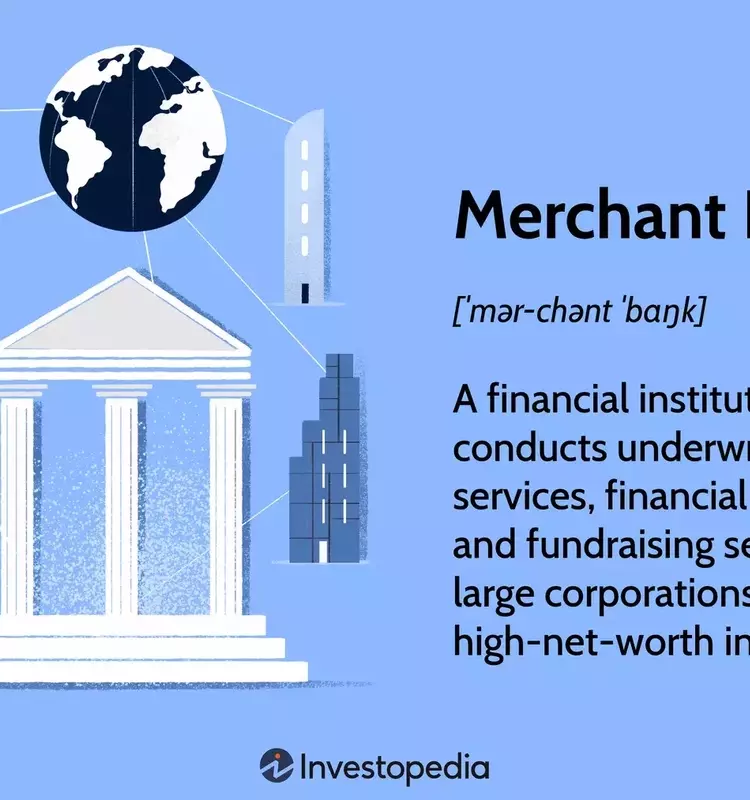
Merchant banks are distinct financial institutions that cater exclusively to privately held companies and high-net-worth individuals, differentiating themselves from retail banks that serve the general public. Their core functions involve underwriting securities, providing business loans, offering financial advisory services, and facilitating fundraising. A key characteristic of merchant banks, especially in the U.S. context, is their focus on private equity transactions and direct investment of their own capital, often working with companies that are not yet ready for a public stock offering. They are instrumental in the realm of international finance, helping multinational corporations navigate complex cross-border operations and currency exchanges.

These institutions are non-depository, meaning they do not offer traditional banking services like checking accounts to the average consumer. Their operational model centers on specialized financial solutions tailored to corporate clients. For instance, merchant banks can arrange private placements, enabling companies to raise capital from sophisticated investors without the extensive regulatory requirements associated with public offerings. This approach is particularly beneficial for smaller companies seeking growth capital or established firms undertaking strategic expansions.

Merchant banks also play a critical role in global business transactions. When a corporation plans a significant acquisition or investment in another country, a merchant bank can provide guidance on transaction structuring, facilitate financing, and manage currency exchange risks. They often issue letters of credit to ensure smooth and secure cross-border payments, mitigating risks for both buyers and sellers. This hands-on involvement extends to helping clients navigate the legal and regulatory complexities of international markets.

A crucial distinction lies between merchant banks and investment banks. While both offer corporate financial services, investment banks typically focus on underwriting and selling securities to the public through initial public offerings (IPOs) for larger, publicly traded companies. Investment banks earn revenue from both advisory fees and interest-based income from their own investments. In contrast, merchant banks primarily operate on a fee-based model, deriving income from the specialized services they provide rather than through interest on loans or leases. Although some large financial groups may integrate both merchant and retail banking operations, the core mission of merchant banking remains its exclusive focus on corporate and high-net-worth clients.

In essence, merchant banks serve as vital partners for private enterprises and affluent individuals, offering a suite of bespoke financial solutions. Their expertise in underwriting, private placements, international finance, and strategic advisory helps clients achieve their financial and growth objectives, particularly in complex or specialized market segments.

More Articles
Finance
Debunking the BlackRock Housing Myth: Understanding the Real Drivers of Rent Increases
A pervasive myth suggests BlackRock is monopolizing the housing market, driving up rents. However, this article clarifies that while large institutional investors do play a role in the housing sector, BlackRock is primarily an asset manager, not a direct owner of rental properties. The true culprits behind escalating rents are complex, involving housing shortages, inflation, and alleged price coordination among real estate entities. Understanding these factors is crucial for addressing housing affordability concerns.
By Suze OrmanJul 22, 2026
Finance
Fairholme Capital Management's Q1 2026 Portfolio Adjustments
Fairholme Capital Management's 13F portfolio value increased to approximately $1.51 billion, with St. Joe Companies (JOE) remaining its primary holding, constituting about 80% of total assets. The firm notably boosted its stake in Progressive Corp. by 160% and marginally increased holdings in Enterprise Products Partners. New, smaller investments were made in Kraft Heinz, Home Bancshares, and several energy companies, while positions in Occidental Petroleum and Energy Transfer were entirely divested.
By Mariana MazzucatoJul 22, 2026
Finance
The Power of Diverse Perspectives in Investment Decisions
This article highlights the crucial role of broad perspectives and collaboration in making informed investment decisions. Drawing parallels from a global soccer tournament and international travel, it argues that a comprehensive understanding, free from individual biases, is essential for evaluating stocks, bonds, companies, industries, markets, and geopolitical situations. Confluence Investment Management's team-based approach, where every voice is valued, exemplifies this philosophy, aiming for continuous improvement rather than elusive perfection in its strategies.
By Michele FerreroJul 22, 2026
Finance
Understanding the Hundredweight (CWT) Measurement
The hundredweight (CWT) is a unit of weight used primarily for agricultural goods and in commodity markets. It measures 100 pounds in the U.S. and 112 pounds in the U.K. While its use has declined with the rise of the metric system, it remains relevant in specific sectors like livestock trading and certain shipping contexts. The article delves into its historical background, practical applications, and how it compares to alternative shipping methods.
By Michele FerreroJul 22, 2026
Finance
Navigating Market Dynamics: Q2 Investment Insights and Macroeconomic Outlook
This report offers an in-depth analysis of Q2 investment performance, highlighting significant gains from key holdings like Uniqure and Gitlab. It also explores pressing macroeconomic concerns, particularly the overheated AI sector and potential global risks such as the Strait of Hormuz. The author expresses confidence in the portfolio's resilience amidst economic uncertainties, emphasizing value-oriented strategies and a balanced approach to market volatility.
By David RubensteinJul 22, 2026