Justice Beyond Compensation: The Role of Punitive Damages
The Core Concept of Punitive Damages: Penalizing Egregious Conduct
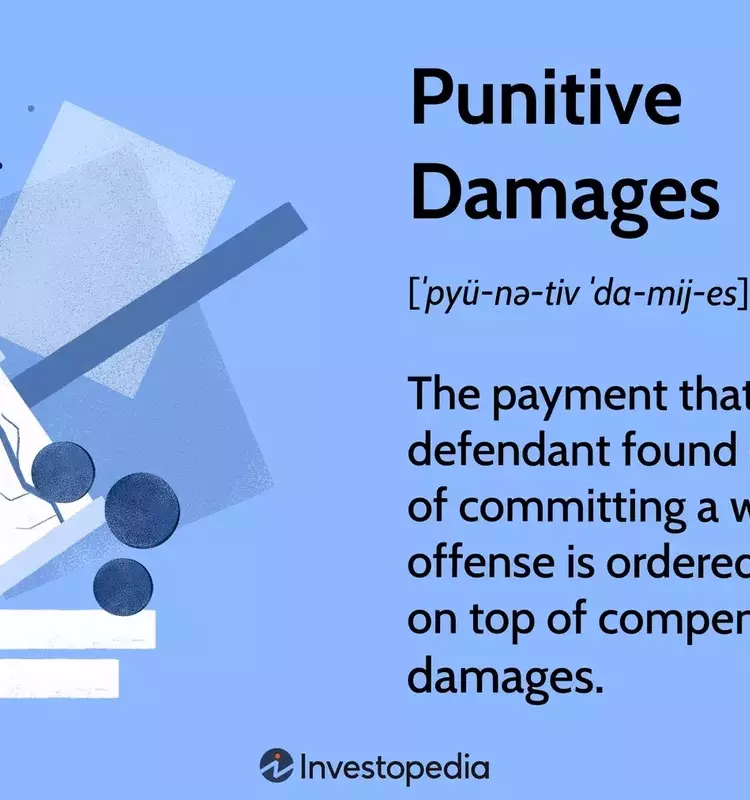
Punitive damages represent a form of financial penalty levied against a defendant in addition to any compensatory amounts. These are reserved for instances where the defendant's actions demonstrate gross negligence or intentional wrongdoing, extending beyond merely making the injured party whole.
The Dual Objective: Punishment and Deterrence in Legal Judgments
Unlike compensatory damages, which aim to reimburse victims for their losses, punitive damages serve a distinct purpose: to punish offenders for their unacceptable behavior and to dissuade both them and others from similar misconduct in the future. They are never awarded in isolation but complement compensatory awards, effectively increasing the plaintiff's total recompense. This mechanism is rooted in the hope that imposing financial penalties beyond direct restitution will act as a powerful disincentive for future misdeeds.
Illustrative Scenario: Applying Punitive Measures in a Hypothetical Case
Consider a hypothetical case where a dietary supplement company markets its products as entirely natural and safe. If a consumer experiences severe illness after using these supplements due to an undisclosed interaction with their prescription medication, they might pursue legal action. Should the court find the company liable for failing to warn consumers about potential risks, it could award both compensatory damages for medical expenses and lost wages, alongside punitive damages to penalize the company's negligence and prevent recurrence.
Deciding Factors: Influences on Punitive Damage Awards
When deliberating on punitive damages, courts meticulously evaluate several key aspects. These include assessing the malicious intent, intentionality, or gross negligence of the defendant's actions. Additionally, judges consider precedents from similar cases where punitive damages were previously awarded. It is crucial to note that the criteria and likelihood of awarding such damages vary significantly across different states, reflecting diverse legal frameworks.
Defining Limits: Understanding Caps on Punitive Damages
While there isn't a universally fixed maximum for punitive damages, the Supreme Court and individual states have established guidelines. Typically, these awards do not exceed four times the amount of compensatory damages. For instance, if a plaintiff receives $100,000 in compensatory damages, the punitive damages would likely be capped at $400,000. However, exceptions can arise in cases of exceptionally egregious conduct, severe harm to the plaintiff, or when non-economic damages are difficult to quantify, potentially leading to higher awards.
A Landmark Case: Punitive Damages in Action
A notable real-world example of punitive damages involved Stella Liebeck and McDonald's in 1992. Liebeck sustained severe burns from spilled hot coffee and sought compensation for her medical expenses. McDonald's initial refusal led to a lawsuit. During discovery, evidence surfaced revealing hundreds of prior complaints about the coffee's extreme temperature, indicating McDonald's awareness of the associated risks and a deviation from industry standards. Ultimately, Liebeck was awarded $200,000 in compensatory damages (later adjusted to $160,000 due to partial fault) and a significant $2.7 million in punitive damages (later reduced to $480,000). This case prompted McDonald's to reduce its coffee serving temperatures, underscoring the deterrent effect of punitive damages.
