Understanding Retirement Costs for Couples Across U.S. States
Finance

Understanding Retirement Costs for Couples Across U.S. States

authorBy Morgan Housel
DateAug 17, 2026
Read time2 min

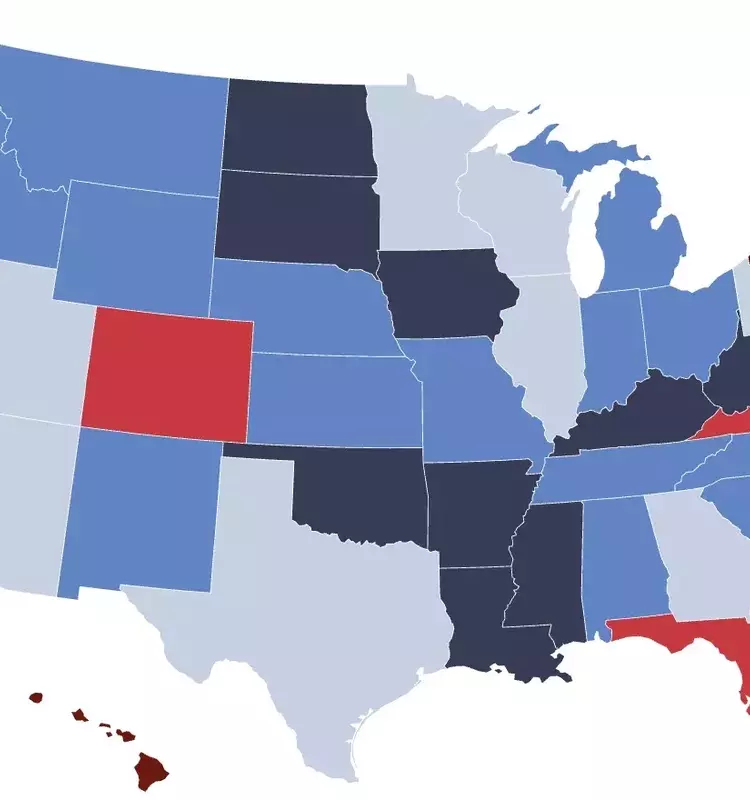
When planning for retirement, the choice of location significantly impacts the financial resources required. A recent analysis indicates that the average American couple, aged 65 or above, requires around $1.16 million in savings to enjoy a comfortable retirement. This national average, however, masks considerable state-by-state variations, with the necessary nest egg ranging from approximately $800,000 in the most affordable states to about $1.33 million in the priciest regions, representing a difference of over half a million dollars.

For a typical retired couple, annual expenditures are roughly $84,000, which is substantially more than the $60,000 spent by a single retiree. This amount supports a comfortable lifestyle that includes leisure activities such as travel, dining, and entertainment, rather than a basic budget. On average, combined Social Security benefits cover about $37,700 annually, or 45% of these expenses, leaving a gap of approximately $46,000 that must be covered by personal savings. Applying the conventional 4% withdrawal rule, this gap translates into the need for about $1.16 million in savings. This sum is notably less than the $1.46 million Americans believe they need, according to a recent Northwestern Mutual study, suggesting a potential discrepancy between perception and reality. The amount needed can also fluctuate based on whether one or both partners have earned full Social Security beneficiary status.

The most expensive places for retired couples, such as New Jersey, Hawaii, California, and Washington, D.C., demand savings upwards of $1.32 million. Conversely, more affordable states, primarily located in the Plains and Appalachia, like North Dakota, Arkansas, and Mississippi, require around $800,000. These cost disparities are largely driven by housing expenses, which constitute about 27% of a couple's retirement budget. Although daily goods and services show less variation across states, consumer prices in places like Hawaii can be 6% higher than the national average, while South Dakota enjoys costs about 7% lower. This analysis considers average spending patterns for couples over 65, including discretionary outlays, offset by Social Security income, but excludes factors like state income taxes on retirement income, potential long-term care costs, and local property tax exemptions for seniors, which can vary greatly by individual circumstances.

Achieving a financially secure retirement for couples in the United States requires careful planning, with geographic location playing a pivotal role in determining the necessary savings. By understanding how housing costs, Social Security benefits, and everyday expenses vary across states, individuals can make informed decisions that align with their retirement goals. This detailed insight into the financial landscape empowers couples to strategically prepare, ensuring a more relaxed and comfortable post-employment life regardless of their chosen domicile.

More Articles
Finance
SoFi Technologies: A Promising Fintech Investment Opportunity
SoFi Technologies (SOFI) continues to be a strong 'buy' due to its aggressive innovation and impressive membership growth, leading to significant revenue and profit expansion. The company's Q2 revenue soared by 42.6% year-over-year to $1.22 billion, with substantial increases in net income and EBITDA. With memberships reaching a record 15.81 million, SoFi leverages a robust flywheel effect, enhancing products per member and launching new offerings. Despite high P/E and P/S ratios, its low valuation on book value metrics presents an attractive growth and value proposition for investors willing to navigate market fluctuations.
By Suze OrmanAug 17, 2026
Finance
The Enduring Significance of Freight Rail in the Modern Economy
Freight rail remains a cornerstone of North American economic infrastructure, handling a substantial portion of intercity freight. This article explores the vital roles and functions of freight railroads, their modern intermodal networks, and their economic importance. It also delves into key considerations for evaluating rail operators and the inherent risks and challenges faced by investors in this cyclical industry.
By Michele FerreroAug 17, 2026
Finance
Historical Market Trends: Dow, Gold, and Silver
Analysis of historical market data reveals a consistent pattern: the Dow Jones Industrial Average tends to reach new nominal highs within 8.12 years after each significant peak in the Dow/Gold ratio. This trend suggests that the Dow might currently be approaching another peak, or is already in a 'danger zone' near a peak, although it could still extend its upward movement for several more months. Conversely, silver prices typically lag behind the Dow, peaking several months after the equity market. This historical correlation is crucial for forecasting silver's future price movements, with potential for a major peak within the next year or even higher peaks between 2032 and 2034.
By Fareed ZakariaAug 17, 2026
Finance
Amazon's Market Value Surpasses $3 Trillion: Future Prospects Explored
Amazon recently achieved a $3 trillion market capitalization, prompting analysis of its future growth trajectory. Despite a recent pullback, experts forecast significant upside, driven by strong AWS performance and expanding AI investments. The company's robust revenue growth and strategic capital expenditures position it favorably against competitors like Microsoft and Alphabet, with a projected target price of $342.78, indicating a potential 30.51% increase.
By David RubensteinAug 17, 2026
Finance
Rethinking "Buy and Hold": The Reality of Long-Term Investing
This article challenges the conventional "buy and hold" investment strategy, arguing it's often unrealistic for the average investor. It highlights how U.S. stocks historically spend a significant portion of time below previous peaks and emphasizes the critical role of starting valuations in determining future returns. The piece advocates for investors to adopt a more strategic, value-oriented mindset rather than speculative tendencies, stressing that the price paid for an asset profoundly influences long-term outcomes. It concludes by suggesting patience and a disciplined approach are essential when market valuations are unfavorable.
By Fareed ZakariaAug 17, 2026