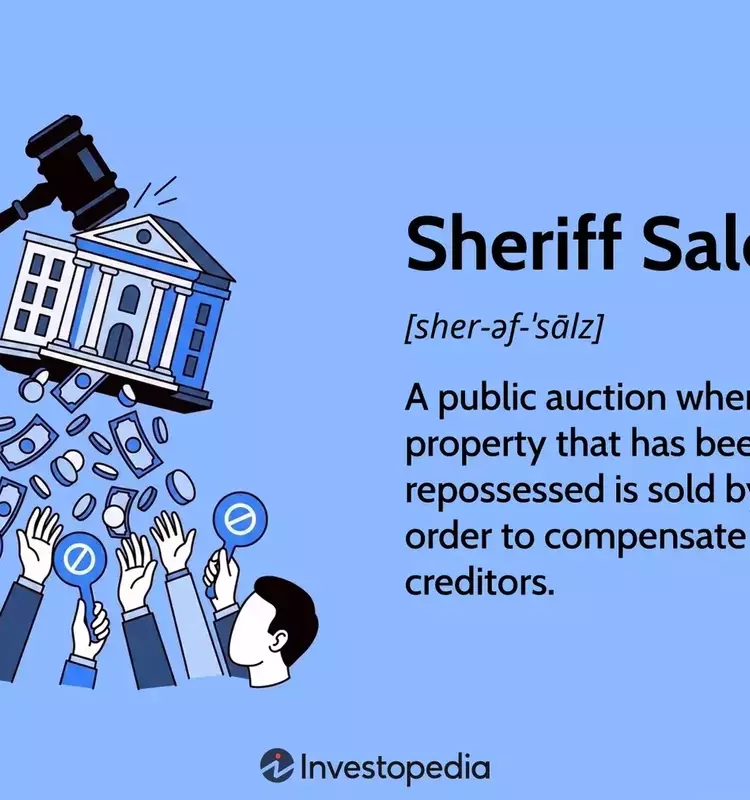
A sheriff's sale is a public auction conducted under court order to sell repossessed property, typically real estate, in order to settle outstanding debts owed to creditors. These auctions occur after a prolonged process where the property owner has defaulted on financial obligations, such as mortgage payments or property taxes. The funds generated from these sales are primarily allocated to repay the original lenders, tax collectors, and other entities holding claims against the property.
The mechanics of a sheriff's sale are integral to understanding its role within the broader foreclosure framework. The event is typically overseen by local law enforcement officials, often on the steps of a courthouse, and is publicly advertised to attract potential bidders. This process is initiated only after a borrower has failed to meet their payment obligations, and a grace period has elapsed. The property, frequently sold in its current condition, goes to the highest bidder. Owners who secure a mortgage use their property as collateral, meaning that if they default on their loan, the lender can claim the property. This judicial foreclosure method ensures that creditors can recover their investments through an official, legally sanctioned process, contrasting with non-judicial foreclosures that might bypass court involvement in some jurisdictions. Tax authorities can also initiate these proceedings if property or income taxes remain unpaid, leading to tax liens that can result in foreclosure if not settled.
An important consideration in these sales is the legal provision known as the "right of redemption." This right, which varies by jurisdiction, allows the original property owner to reclaim their property even after it has been auctioned, provided they pay the full amount of the lien and any associated costs. This provision offers a potential pathway for former owners to recover their assets despite the foreclosure. While bankruptcy can temporarily halt a sheriff's sale, offering a debtor time to reorganize finances, it does not guarantee the retention of the property. The distinction between a sheriff's sale and other foreclosure auctions often lies in the authority conducting the sale; sheriff's sales are court-mandated and executed by law enforcement, whereas other foreclosure auctions might be handled by a trustee on behalf of the lender. Moreover, tax sales, while also public auctions of properties with delinquent taxes, differ in frequency and purpose, typically occurring annually with multiple properties on offer, compared to sheriff's sales that often involve single properties throughout the year to satisfy a lender's debt.
Navigating the complexities of property ownership and financial obligations requires diligence and foresight. Understanding processes like sheriff's sales highlights the critical importance of fulfilling financial commitments and being aware of the legal safeguards and recourse options available. It encourages responsible financial planning and provides a clear picture of the consequences when such responsibilities are not met, underscoring the need for homeowners to actively manage their debts and property-related liabilities to avoid such challenging circumstances.
