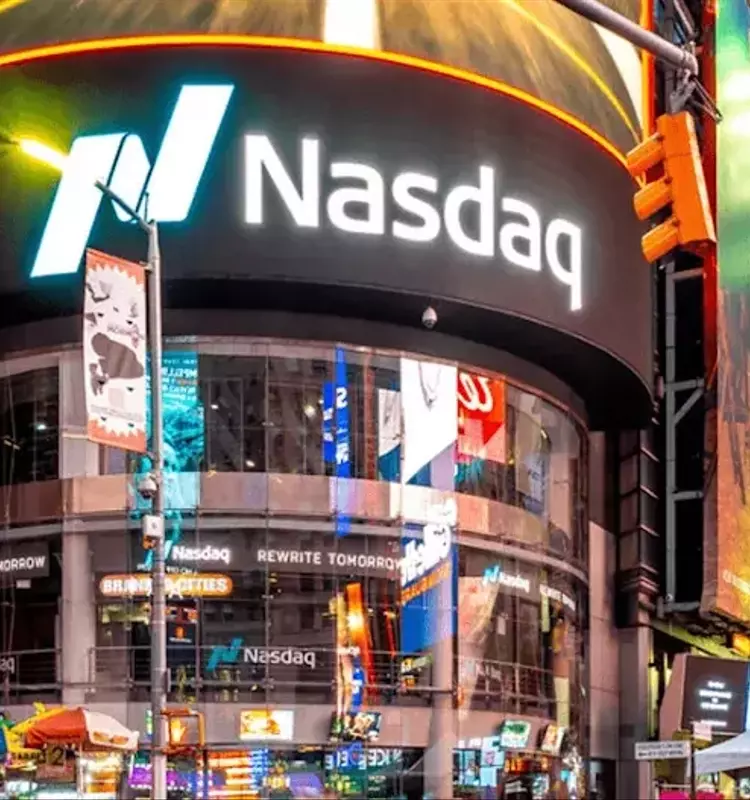
As the trading week commenced, Wall Street found itself in a state of delicate equilibrium, with U.S. equity futures showing minimal fluctuation. Investors were grappling with a dichotomy of influences: the promising surge in artificial intelligence companies contrasted sharply with signs of a weakening economy and persistent geopolitical unrest impacting global energy markets. This intricate interplay of factors is dictating the cautious mood across financial markets.
Global Market Dynamics: AI Prosperity, Economic Softness, and Geopolitical Undercurrents
Monday's market opening saw Wall Street futures holding steady, as financial participants evaluated a mix of encouraging and concerning indicators. A notable highlight emerged from the technology sector, with reports suggesting that Anthropic, a prominent AI developer, experienced a remarkable surge in its second-quarter revenue, increasing fourteen-fold year-over-year to over $11.5 billion, a significant leap from $787 million in the same period of 2025. This exceptional growth, if confirmed, is poised to inject further enthusiasm into the burgeoning artificial intelligence industry, potentially offsetting broader market hesitations.
However, beneath this technological optimism, a more subdued economic picture is unfolding. Recent economic data from the United States indicates a slowdown, which has prompted a reevaluation of the Federal Reserve's stance on interest rate adjustments. The University of Michigan's consumer sentiment index registered a decline to 51.0 in August from 55.2 in July, falling short of economists' projections. Similarly, retail sales in July saw an unexpected 0.6% contraction, marking the first monthly decline since October 2025. These figures collectively suggest a softening in consumer activity, leading investors to question the overall health of the U.S. economy. While these developments might reduce the likelihood of immediate interest rate hikes, they simultaneously fuel concerns about a more pronounced economic downturn.
Adding another layer of complexity are the volatile energy markets, heavily influenced by the ongoing U.S.-Iran tensions. Following former President Donald Trump's remarks during a Fox News interview, crude oil futures advanced, with U.S. crude reaching $83 a barrel. These comments, made as Iran and Oman appeared to be seeking common ground regarding the management of the critical Strait of Hormuz, underscore the fragility of global energy supplies. Persistently elevated oil prices present a challenging scenario for policymakers, as they risk stoking inflationary pressures precisely when consumer demand appears to be waning. Furthermore, indications from the Trump administration about potential economic measures to ensure the reopening of the Strait of Hormuz suggest that disruptions in this vital waterway could continue, maintaining market uncertainty.
Against this backdrop, major stock indices experienced a slight retreat in the preceding trading session. On Friday, the Dow Jones Industrial Average shed 0.2% to close at 53,732.41, the Nasdaq fell 0.3% to 26,729.16, and the S&P 500 declined 0.2% to 7,785.76. Despite this daily dip, the Nasdaq and S&P 500 had demonstrated robust weekly gains, with the S&P 500 even reaching an all-time intraday and closing high on Thursday. This suggests some profit-taking by investors after a strong two-day rally. Interestingly, sectors tied to commodities, such as oil services and gold mining companies, showed considerable resilience, with the Philadelphia Oil Service Index climbing 2.6% and the NYSE Arca Gold Bugs Index advancing 2.2%. Computer hardware stocks also performed well, contrasting with weaknesses in airline, software, and pharmaceutical sectors. Consequently, investors approach the current week confronted by multiple powerful market forces. The reduced anticipation of an immediate Federal Reserve rate hike provides support for risk assets, yet the combination of weaker consumer indicators, elevated crude oil prices, and the unpredictable U.S.-Iran conflict creates an environment where a definitive market direction remains elusive.
The confluence of these factors highlights a market caught between innovation-driven growth and traditional economic concerns. The impressive performance of AI companies like Anthropic showcases the transformative potential of new technologies. However, the broader economic landscape, marked by cautious consumer spending and geopolitical instability, reminds us of the persistent challenges that can temper market enthusiasm. Investors must remain vigilant, balancing the allure of rapid technological advancement with the realities of an interconnected global economy. This delicate dance between opportunity and risk will undoubtedly continue to define market movements in the foreseeable future, emphasizing the need for adaptable strategies and careful analysis.
