While the allure of high-yield investments often captures investor attention, true market outperformance frequently stems from the meticulous avoidance of precarious ventures. This article delves into why Community Healthcare Trust (CHCT), despite its superficially attractive dividend, presents considerable risks to shareholder capital, warranting caution from discerning investors. The analysis uncovers critical vulnerabilities that suggest a challenging path ahead for the company and its dividend policy.
Community Healthcare Trust Grapples with Mounting Financial Headwinds and Governance Concerns
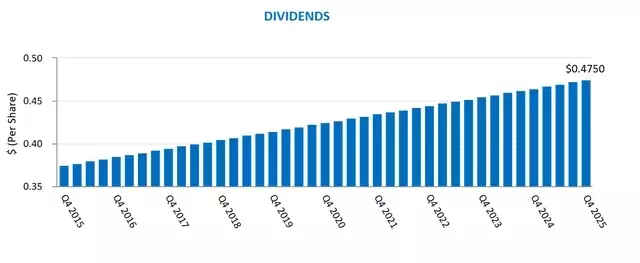
Community Healthcare Trust (CHCT), a healthcare real estate investment trust, currently offers an impressive 11.15% dividend yield, seemingly supported by a history of consistent dividend increases. However, a deeper financial review reveals several concerning issues that cast a shadow over its long-term sustainability. The company's reported Adjusted Funds From Operations (AFFO) is considerably higher than its Funds From Operations (FFO), a red flag that typically warrants closer inspection, especially in capital-intensive sectors like healthcare. In 2025, CHCT's AFFO benefited from a substantial $14.896 million add-back for stock-based compensation. When this figure is adjusted, the company's true AFFO per share falls to $1.62, rendering the reported $2.16 AFFO per share misleading. This revised calculation indicates a concerning 118% payout ratio, suggesting the current dividend of $1.91 per share is not sustainably covered by operational cash flows.
Adding to these financial discrepancies is a pattern of excessive General and Administrative (G&A) expenses. In 2025, G&A costs reached $25.095 million, representing 5.4% of the company's $460 million market capitalization and nearly 21% of its $121.351 million rental revenue. This level of overhead is particularly burdensome for a smaller REIT, raising questions about management's fiscal responsibility and operational efficiency. Previous controversies, such as the $24.7 million compensation package received by former CEO Timothy Wallace in 2023, underscore a recurring issue of high executive remuneration that appears disconnected from shareholder returns.
CHCT also faces significant tenant-related challenges. A notable incident involved a tenant operating six behavioral health facilities, who ceased full rent payments. This led to substantial credit loss reserves, including $8.7 million in the second quarter of 2025 and $11.0 million in the same period of 2024. While these impairments were controversially added back into FFO and AFFO calculations by management, their exclusion would further reduce the true AFFO by an additional $0.32 per share. This highlights the inherent risks in CHCT's business model, which often involves acquiring properties with higher cap rates but also elevated tenant and location-specific risks.
The company's growth strategy, once reliant on cheap equity capital from a high trading multiple, has been disrupted by a significant decline in its stock price. This has forced CHCT to finance acquisitions through a combination of asset sales and increased debt. This shift has led to a considerable rise in debt ratios, with debt to enterprise value exceeding 50%. Critically, this increased leverage has not translated into improved AFFO per share, which has instead faltered. This trajectory of higher debt and declining per-share profitability suggests an unsustainable path for the company's financial health.
Navigating the Treacherous Waters of High-Yield Investments
The case of Community Healthcare Trust serves as a potent reminder for investors to look beyond superficial metrics like high dividend yields. It underscores the critical importance of rigorous due diligence, particularly in scrutinizing management compensation, the accuracy of reported financial metrics, and the underlying operational health of a company. When leadership prioritizes exorbitant pay packages while the company's fundamentals weaken, it signals a potential misalignment with shareholder interests. This analysis of CHCT reinforces the principle that avoiding fundamentally flawed investments, even those with tempting yields, is often a more reliable path to long-term portfolio growth than chasing short-term gains in high-risk ventures.
