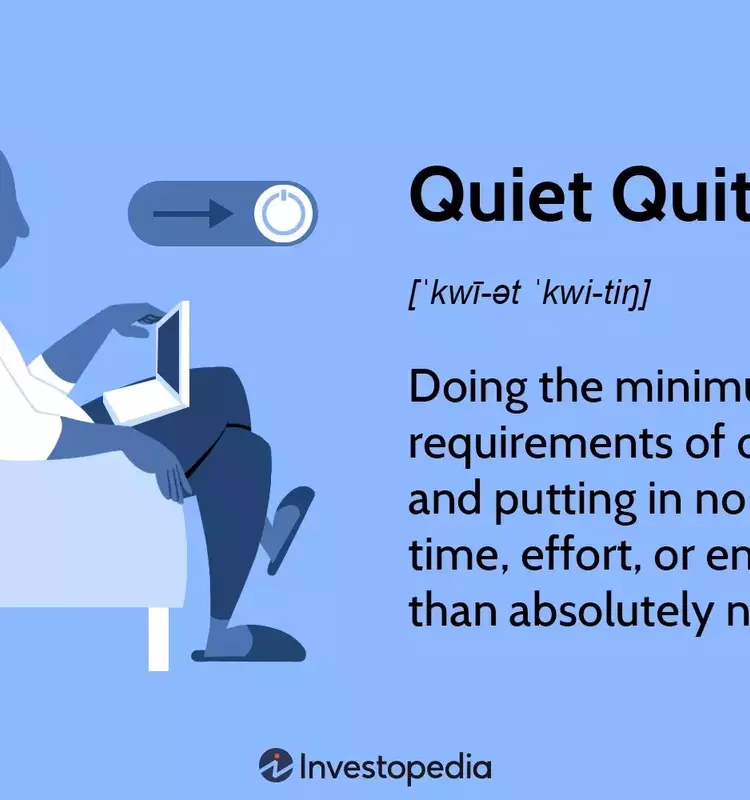
The concept of "quiet quitting" describes a workplace phenomenon where individuals commit solely to their core job responsibilities, deliberately refraining from expending additional effort or showing heightened enthusiasm. This behavioral pattern rose to prominence in the early 2020s, largely amplified by discussions across social media platforms. However, whether this represents a genuinely novel trend or merely a re-packaging of long-standing employee disengagement remains a subject of considerable debate. A significant finding from a 2023 Gallup report indicated that a substantial 59% of the global workforce might be categorized as quiet quitters. The implications of this behavior extend beyond professional settings, influencing personal relationships as well, and prompting diverse responses from employers regarding employee motivation and performance.
The Subtle Shift in Workplace Commitment: Unpacking Quiet Quitting
In the contemporary professional landscape, a notable shift in employee commitment, dubbed "quiet quitting," has emerged as a significant topic of discussion. This phenomenon, which gained widespread attention in the early 2020s, especially through platforms like TikTok, describes a scenario where workers adhere strictly to their contractual duties, consciously avoiding any tasks or efforts that go beyond the basic requirements of their role. Esteemed academics Anthony C. Klotz and Mark C. Bolino, in their September 2022 Harvard Business Review article, meticulously detailed this trend. They highlighted that quiet quitters diligently perform their primary responsibilities but actively disengage from "citizenship behaviors"—such as extended work hours, early arrivals, or participation in optional meetings. This behavior suggests a deliberate boundary-setting by employees, focusing on work-life balance over career advancement.
The origins of the term itself are somewhat contested. Some sources attribute its coinage to Bryan Creely, a career coach from Nashville, following a viral TikTok and YouTube video he released on March 4, 2022. Others point to economist Mark Bolger as the progenitor of the phrase as early as 2009, or even draw parallels to China's "lying flat" movement from the preceding year, indicating a global sentiment of resistance to overwork. Regardless of its precise genesis, the concept resonates deeply with many. A compelling 2023 report from Gallup's "State of the Global Workplace" revealed that a striking 59% of the international workforce could be identified as quiet quitters, with this figure being particularly pronounced among American workers under the age of 35, according to a 2022 Gallup survey. These statistics, derived from questions assessing employee involvement and passion for their work, suggest that only about 32% of the workforce feels truly engaged, while 18% are openly dissatisfied, leaving the remaining 50% as the quiet quitters. This implies a widespread sentiment of dissatisfaction among American employees.
Managerial responses to quiet quitting have been diverse. Some have shown tolerance, particularly in light of tight labor markets that make replacing employees challenging. Others have adopted a counter-strategy known as "quiet firing," where job conditions become so undesirable that employees are implicitly pushed towards resignation. The cultural implications of quiet quitting are not confined to the workplace; the term has permeated discussions about personal relationships, including marriages, underscoring a broader societal re-evaluation of commitment and effort.
The rise of quiet quitting prompts an essential reflection on contemporary work culture and employee well-being. It challenges organizations to move beyond superficial engagement metrics and delve into the underlying causes of employee disaffection. For leaders, it serves as a powerful reminder to scrutinize their management practices and organizational climate, fostering environments where employees feel valued, motivated, and genuinely connected to their work. This trend, whether entirely new or a re-articulation of existing sentiments, demands serious consideration to cultivate a more sustainable and fulfilling professional ecosystem.
