Stellantis, the global automotive conglomerate, announced stronger-than-anticipated earnings for the first quarter. However, the absence of an upward revision to its full-year financial outlook led to a notable drop in its stock value. This outcome stands in contrast to its major competitors, General Motors and Ford, which recently provided more optimistic projections for the current year. The company's performance is set against a backdrop of strategic adjustments and a shift towards more frequent financial disclosures.
For the initial three months of the year, Stellantis reported a revenue of 38.13 billion euros, or approximately 44.59 billion U.S. dollars, which slightly underperformed the Bloomberg consensus of 38.49 billion euros (45.06 billion U.S. dollars). Nevertheless, this figure represented a 6% increase compared to the previous year. The adjusted earnings per share (EPS) came in at 0.21 euros (0.25 U.S. dollars), significantly surpassing the expected 0.12 euros (0.14 U.S. dollars). Furthermore, the adjusted operating income reached 960 million euros (1.12 billion U.S. dollars), nearly tripling the anticipated 568 million euros (664.2 million U.S. dollars) from the prior year. Despite these robust profit figures, investors reacted negatively to the unchanging full-year guidance, resulting in a more than 6% decline in share prices during early trading.
Stellantis, known for brands such as Jeep, Dodge, Fiat, and Chrysler, has traditionally provided financial updates on a semi-annual basis. However, the company is now moving to a quarterly reporting structure, a change spearheaded by CEO Antonio Filosa. This increased transparency is part of a broader effort to restore investor confidence after a challenging 2025. The company reaffirmed its 2026 targets, projecting a mid-single-digit increase in net revenues and a low-single-digit adjusted operating income margin. A key objective is to achieve positive industrial free cash flow by 2027.
The competitive landscape saw Stellantis's rivals, Ford and GM, each boost their full-year profit outlooks by $500 million. This was largely attributed to tariff relief following a Supreme Court decision invalidating certain tariffs. Stellantis indicated that the overall impact of tariffs on its financials was "broadly neutral" year-over-year, with adjustments offsetting initial tariff costs. The company's estimated net tariffs for the year were revised down to 1.3 billion euros (1.52 billion U.S. dollars) from 1.6 billion euros (1.87 billion U.S. dollars), primarily due to the recognition of $468 million in tariff cost adjustments.
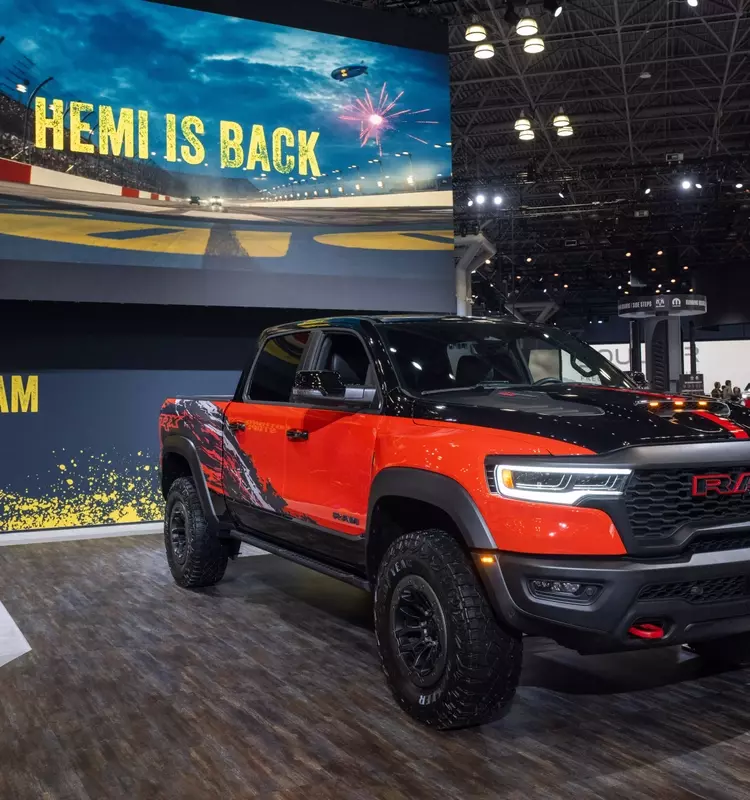
CEO Antonio Filosa commented on the first quarter's results, noting that they reflect the initial successes of their initiatives to achieve sustainable and profitable growth. He highlighted the positive reception of products launched in the previous year and expressed confidence that the ten new vehicle models planned for 2026 will further build on this momentum. This strategic reset is crucial, especially considering Stellantis ended 2025 with a significant net loss of €22.3 billion ($26.1 billion), its first annual loss since the merger of Fiat Chrysler Automotive and PSA Group in 2021. This loss was largely due to substantial charges related to the strategic overhaul, including write-downs on electric vehicle assets and a re-evaluation of its product lineup, such as introducing gasoline-powered options and bringing back the Hemi V8 engine for its trucks.
Earlier in the month, Stellantis also disclosed that its estimated consolidated shipments for the first quarter of 2026 reached approximately 1.4 million units, marking a 12% increase year-over-year. This growth in volume suggests that the product refresh and inventory normalization strategies implemented since late 2025 are beginning to yield positive results, particularly in the North American and European markets. This indicates a potential turnaround in operational efficiency and market presence for the automotive giant.
In summary, Stellantis's first-quarter performance revealed stronger-than-expected profits but failed to impress investors due to the absence of an updated full-year guidance, leading to a stock downturn. The company is actively pursuing a strategic transformation, including a shift to quarterly financial reporting and a focus on product revitalization, to foster renewed growth and bolster market confidence following a challenging prior year and amidst a competitive industry landscape where rivals have shown more optimistic projections.
