Navigating Natural Resource Accounting: The Depletion Imperative
The Core Concept of Depletion
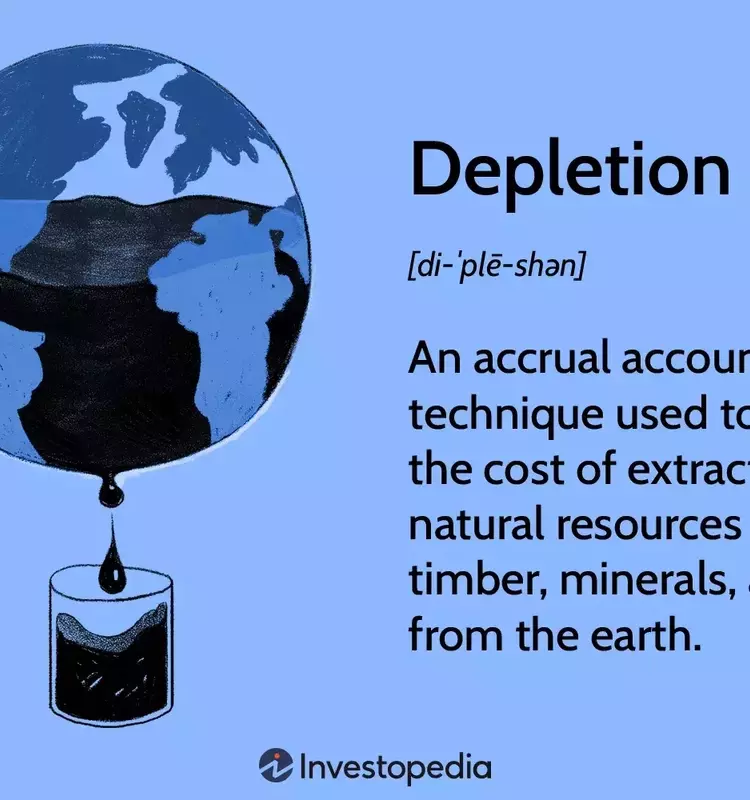
Depletion serves as a critical accounting mechanism designed to systematically distribute the expenditures associated with extracting natural assets from the earth, encompassing materials such as timber, minerals, and petroleum. It functions as a non-cash expense, incrementally diminishing the cost basis of an asset through scheduled charges to income, mirroring the principles of depreciation for physical assets and amortization for intangible assets.
Depletion's Role in Financial Reporting
In the realm of accounting and financial reporting, depletion plays a pivotal role in accurately assessing the value of assets on the balance sheet and ensuring that expenses are recognized within the correct fiscal periods on the income statement. When the costs linked to the extraction of natural resources are capitalized, these expenses are then methodically allocated across various accounting periods in direct correlation with the volume of resources extracted. These costs remain on the balance sheet until their eventual recognition as expenses.
Categorizing Depletion Expenses
To precisely calculate the expenses that need to be distributed for the utilization of natural resources, a comprehensive evaluation of each stage of production is required. The depletion base, which represents the total capitalized costs, is spread over multiple accounting periods. This base is influenced by four primary factors:
- Acquisition: These are the costs incurred in acquiring or leasing the rights to land believed to contain natural resources.
- Exploration: This category includes expenses related to drilling and surveying the leased or purchased land.
- Development: These are the necessary costs to prepare the land for resource extraction, such as constructing tunnels or establishing wells.
- Restoration: This covers the expenses involved in rehabilitating the land to its original state post-extraction.
The Percentage Depletion Approach
One methodology for calculating depletion expense is the percentage depletion method. This technique involves applying a fixed percentage to the gross revenue (total sales less associated costs) generated from the extracted resource to determine the allocated expenses. For instance, if petroleum valued at $10 million is extracted and a fixed percentage of 15% is applied, then $1.5 million of the capitalized extraction costs are recorded as depleted. However, this method relies heavily on estimations and is therefore not widely accepted or frequently used.
The Cost Depletion Approach
The alternative method for calculating depletion is the cost depletion approach. This calculation considers the property's cost basis, the total recoverable reserves, and the number of units sold. The property's cost basis is distributed proportionally among the total estimated recoverable units. As natural resources are extracted, they are quantitatively recorded, and a corresponding portion of the property's cost basis is reduced. For example, if capitalized costs of $1 million are associated with 500,000 barrels of oil, and 100,000 barrels are extracted in the initial year, the depletion expense for that period would be $200,000 (100,000 barrels multiplied by the ratio of $1,000,000 to 500,000 barrels).
IRS Mandates for Depletion Reporting
The Internal Revenue Service (IRS) mandates the use of the cost method for timber resources. For mineral properties, which include oil and gas wells, mines, and various natural deposits like geothermal reserves, the IRS permits the use of the method that yields the highest allowable deduction. Due to its reliance on gross income and taxable income limits rather than the physical quantity of extracted resources, the percentage depletion method is generally not deemed an acceptable reporting approach for specific natural resources.
The Significance of Depletion Accounting
Depletion is a crucial accounting mechanism that enables organizations to accurately reflect the diminishing value of natural resources as they are progressively extracted and commercialized. While the percentage depletion method determines deductions based on a portion of gross income, the cost depletion method directly links expenses to the volume of resources removed from a site. These IRS reporting regulations influence which method businesses can employ, making depletion an integral component of both financial reporting and strategic tax planning for enterprises engaged in natural resource extraction activities.
